How to Heal Faster and Avoid Infection
Getting your ears pierced is exciting, but what happens after you leave the studio determines whether you’ll have healthy, beautiful piercings or a frustrating healing process. Many people don’t realise that proper aftercare starts the moment you get pierced and continues for weeks or months depending on the location. The good news is that you can speed up healing and avoid most problems with the right approach.

Ear lobe piercings typically heal in six to eight weeks, whilst cartilage piercings can take six to twelve months, but following proper cleaning routines and avoiding common mistakes can help your piercing heal faster and reduce your risk of infection. Your body needs the right conditions to heal effectively, which means keeping the area clean without overdoing it, choosing the right products, and knowing what to avoid.
This guide covers everything you need to know about caring for your new ear piercing. You’ll learn the essential daily cleaning steps, how to spot potential problems early, and what factors affect your healing timeline so you can make informed decisions about your aftercare routine.
Key Takeaways
- Clean your new piercing twice daily with antibacterial soap and water using a clean washcloth
- Avoid touching your piercing unnecessarily, swimming in pools, and changing jewellery before it’s fully healed
- Watch for signs of infection like persistent redness, swelling, pus, or pain that worsens rather than improves
Immediate Steps Following a New Ear Piercing
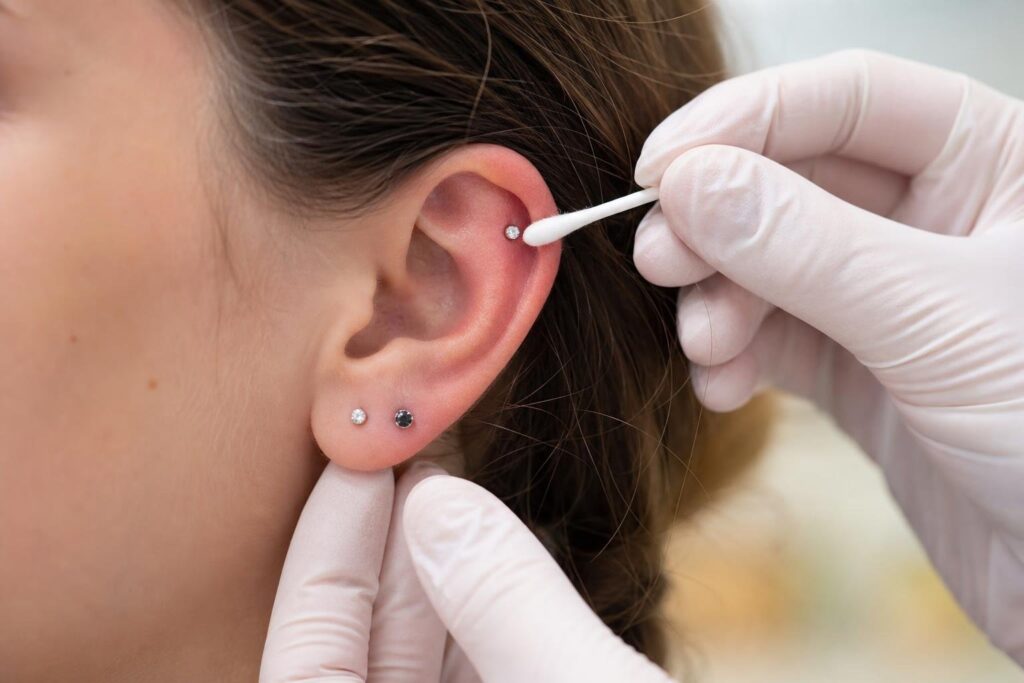
The first few hours and days after getting an ear piercing set the foundation for proper healing. Clean hands, careful handling, and the right products protect your newly pierced ears from infection and complications.
Why Hygiene Matters for Newly Pierced Ears
An ear piercing creates an open wound that needs protection from bacteria and germs. Your body treats this fresh piercing as an injury, which means keeping the area clean is essential for healing.
Touching your newly pierced ears with dirty hands transfers bacteria directly into the wound. This can lead to infections that cause pain, swelling, and discharge. Each time you touch your piercing, you risk introducing harmful germs.
Key hygiene practices include:
- Washing your hands thoroughly with antibacterial soap before touching your ears
- Avoiding contact with the piercing unless you’re cleaning it
- Keeping mobile phones, headphones, and pillowcases clean
- Tying back long hair to prevent it from snagging on earrings
Your piercing specialist creates the wound in a sterile environment, but maintaining that cleanliness afterwards is your responsibility. Poor hygiene is one of the main causes of piercing infections.
First 24 Hours: Do’s and Don’ts
The first day after your ear piercing requires careful attention. Your ears may feel tender, appear slightly red, and throb a bit. This is normal and should ease within a day or two.
Do:
- Leave the original earrings in place
- Clean the piercing twice with antibacterial soap and water
- Check that earring backs are secure but not too tight
- Take paracetamol if you experience discomfort
- Sleep on the opposite side to avoid pressure on the piercing
Don’t:
- Remove or change your earrings
- Swim in pools, hot tubs, or open water
- Apply makeup, hair products, or perfume near the piercing
- Use aspirin or ibuprofen before the piercing (they thin your blood)
- Rotate or twist the jewellery
Choosing Safe Aftercare Solutions
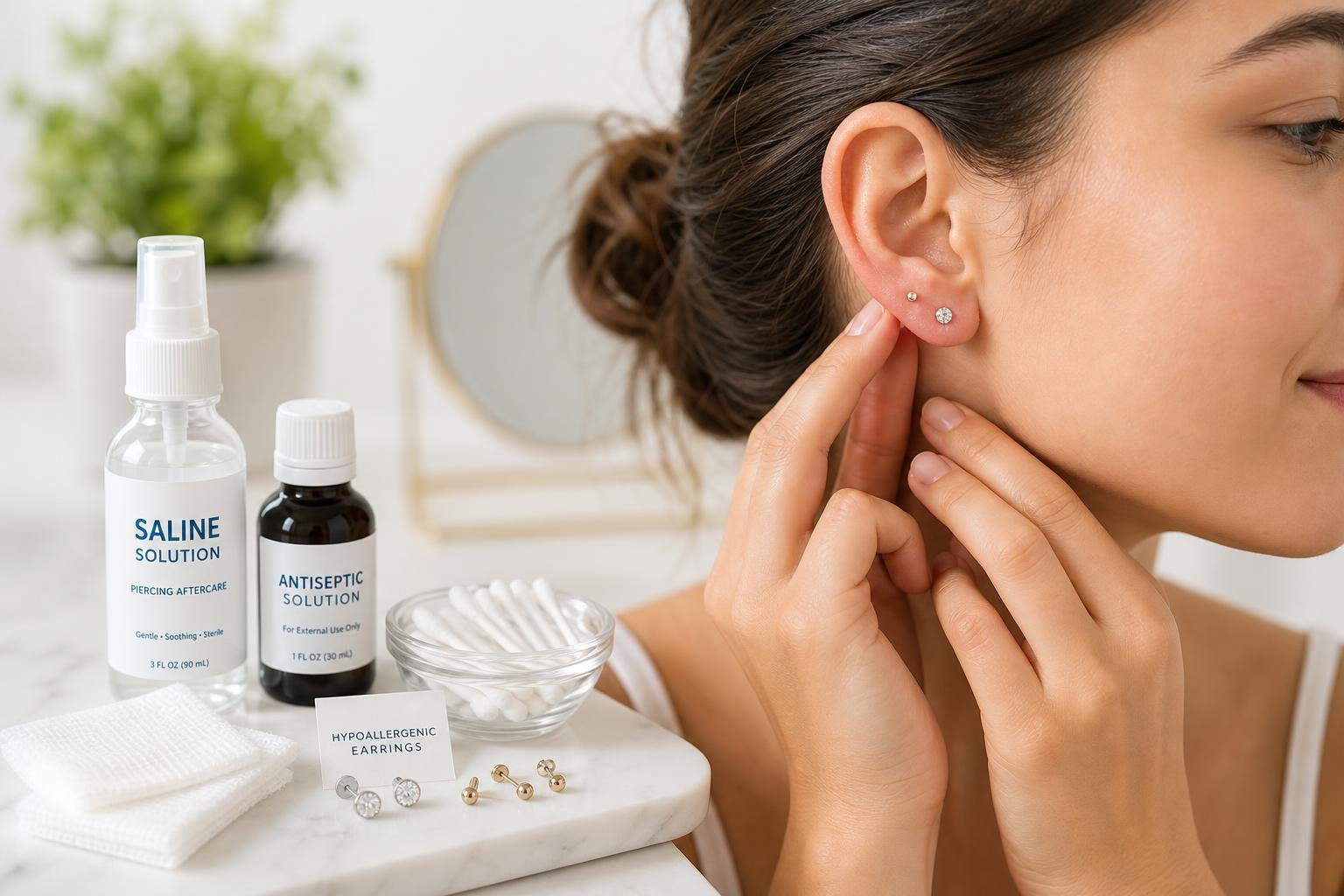
Simple antibacterial soap and warm water work best for cleaning newly pierced ears. You don’t need expensive products or complicated routines.
Use a clean washcloth with antibacterial soap lathered in warm water. Gently clean both the front and back of your piercing twice daily. Rinse thoroughly and pat dry with a clean tissue or paper towel.
Avoid these common aftercare mistakes:
| Product | Why to Avoid |
|---|---|
| Antibiotic creams | Can cause allergic reactions and don’t speed healing |
| Tea tree oil | May irritate sensitive skin during initial healing |
| Alcohol or hydrogen peroxide | Too harsh and can damage healing tissue |
| Cotton wool | Fibres can catch on earrings and introduce bacteria |
Your piercing specialist may recommend a specific aftercare solution. If they do, follow their instructions carefully. However, basic soap and water remains the gold standard for most ear piercings.
Cleaning and Daily Aftercare Essentials
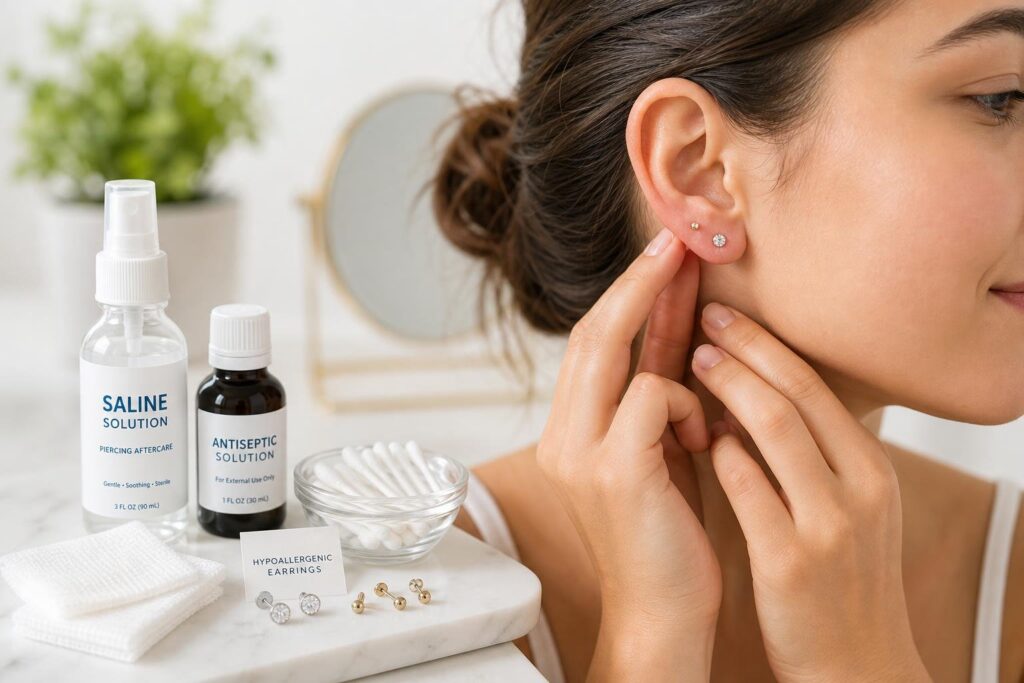
Proper cleaning twice daily with the right technique prevents infection and speeds healing. Your piercing aftercare routine should be simple, consistent, and gentle to avoid disrupting the natural healing process.
How to Clean Your Ear Piercing Safely
Wash your hands thoroughly before touching your piercing. This prevents bacteria from transferring to the healing wound.
Use antibacterial soap and water on a clean washcloth. Lather both the front and back of your piercing gently, then rinse with clean water. Pat dry with a fresh paper towel or clean cloth.
Clean your ear piercing twice daily—once in the morning and once before bed. This routine removes dead skin cells, discharge, and bacteria without over-cleaning, which can irritate the wound.
Don’t rotate or twist your jewellery during cleaning. A piercing is a puncture wound, and moving the jewellery disturbs the healing tissue. Simply clean around it carefully.
Check that your earring backing is secure but not too tight. If it’s too loose, it might fall out. If it’s too tight, it restricts airflow and can embed in your skin.
Aftercare Tips to Minimise Risk
Avoid touching your piercing except when cleaning. Your hands carry bacteria that can cause infection.
Stay out of pools, hot tubs, and natural bodies of water until your piercing has fully healed. These environments contain bacteria that easily infect open wounds.
Sleep on the opposite ear to avoid pressure on your new piercing. Pressure can cause irritation and slow healing.
Keep hair products, makeup, and perfumes away from your piercing. These products contain chemicals that irritate healing tissue.
Wear loose-fitting clothing that won’t catch on your jewellery. This prevents accidental tugging and trauma.
Products and Solutions to Avoid
Don’t use rubbing alcohol, hydrogen peroxide, or antibiotic creams. These products dry out your skin and can cause allergic reactions.
Avoid tea tree oil and other essential oils. Whilst some people recommend these for piercing aftercare, they can trigger allergic reactions and don’t speed healing.
Skip harsh antiseptics and disinfectants. These kill healthy cells alongside bacteria, slowing your healing process.
Don’t use cotton buds or cotton wool directly on your piercing. Fibres can catch on jewellery and get stuck in the wound.
Stick with plain antibacterial soap and water or sterile saline solution recommended by your piercer. Simple aftercare solutions work best for healthy healing.
Factors Affecting Healing Time
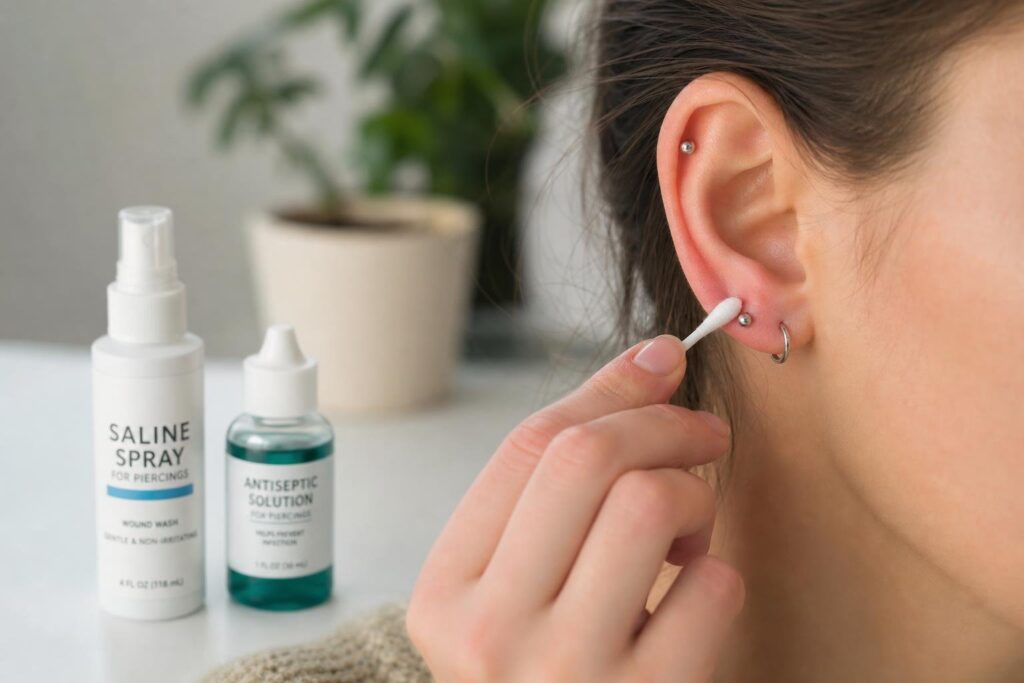
Not all piercings heal at the same rate. Your piercing healing time depends on where you got pierced, what jewellery you wear, and how you live your daily life.
Differences Between Lobe and Cartilage Piercings
Ear lobe piercings heal much faster than cartilage piercings. Your lobes typically heal in six to eight weeks because they’re made of fatty tissue with lots of blood flow.
Cartilage piercings take six months to a year to fully heal. This includes daith, rook, conch, helix, and tragus piercings. Cartilage gets less blood supply than soft tissue, which means it repairs itself more slowly.
The location of your piercing matters beyond just lobe versus cartilage. Piercings closer to the edge of your ear often heal faster than those deeper in the cartilage folds. Thicker cartilage areas naturally need more time to rebuild tissue around the jewellery.
Your newly pierced ears need different care depending on the location. Lobe piercings are less likely to bump against things during sleep or daily activities, whilst cartilage piercings are more exposed to accidental trauma.
The Role of Piercing Jewellery Materials
The material of your piercing jewellery directly affects how fast you heal. Some metals irritate your skin and slow down the healing process.
Safe materials for newly pierced ears include:
- 14K gold – hypoallergenic and won’t cause reactions
- Medical-grade steel – affordable and body-safe
- Titanium – lightweight and ideal for sensitive skin
Avoid costume jewellery with nickel or alloys during healing. These materials cause allergic reactions that lead to redness, swelling, and extended healing times. Even after your piercing heals, these metals can irritate your skin.
The design of your jewellery also matters. Earring backs should be secure but not too tight. If they’re too loose, bacteria can enter. If they’re too tight, they restrict blood flow and can even get absorbed into your healing skin.
Lifestyle Factors That Can Delay Healing
Your daily habits impact how quickly your ear piercings heal. Swimming in pools or hot tubs before your piercing heals introduces bacteria that cause infections.
Touching your piercing with unwashed hands brings germs to the wound. Each time you bump or disturb the area, you disrupt the healing tissue and restart parts of the process.
Your overall health plays a role too. If your body’s natural healing response is slower due to health conditions or poor nutrition, your piercings take longer to heal. Getting enough sleep, staying hydrated, and eating well support faster recovery.
Hair products, makeup, and perfumes near your piercing can irritate the area. Sleeping on your piercing puts pressure on it and causes trauma. Phone usage against newly pierced ears transfers bacteria and applies unwanted pressure.
Avoiding and Responding to Complications
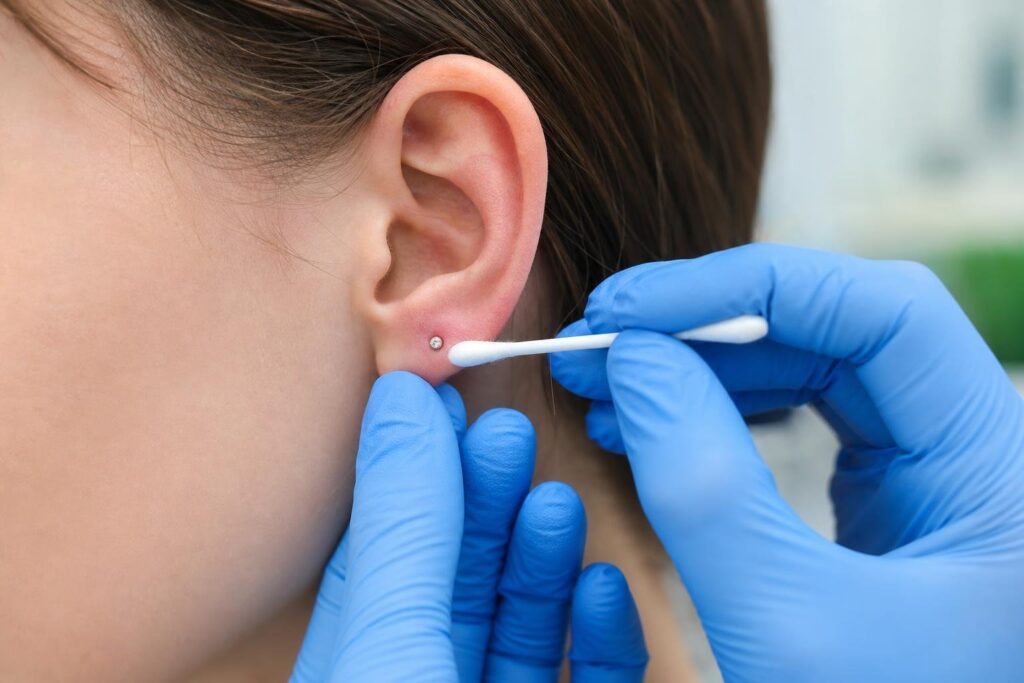
Even with proper ear piercing aftercare, complications can sometimes occur. Knowing how to spot problems early and respond correctly can prevent minor issues from becoming serious infections that require medical treatment.
Recognising Signs of Infection or Irritation
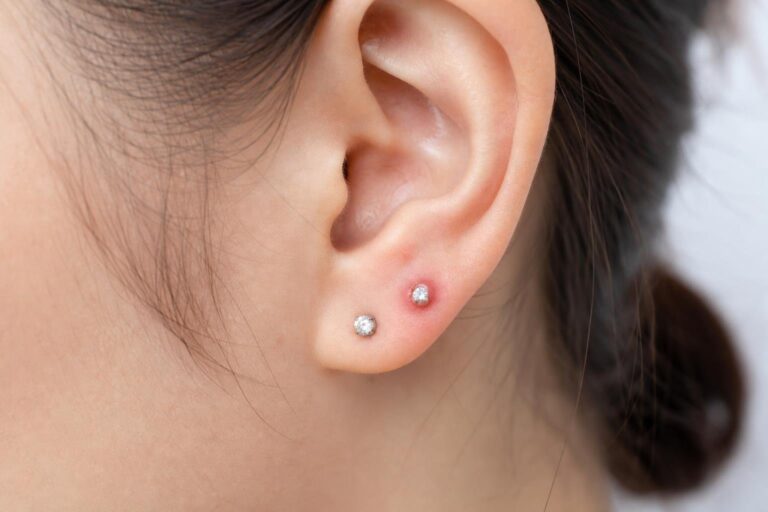
Normal healing involves some tenderness, slight swelling, and a small amount of clear fluid that forms a crust. These symptoms should improve over the first few days. Your piercing might be infected if the area becomes increasingly swollen, painful, hot to touch, and very red or darker than usual depending on your skin colour.
Watch for pus that appears white, green, or yellow coming from the piercing site. If you feel hot, cold, shivery, or generally unwell, these are warning signs that need immediate attention.
Small lumps around ear or nose cartilage piercings are called granulomas. These are trapped fluid and usually aren’t serious. You can treat them by soaking a pad in warm water and holding it against the lumps once daily.
What to Do If Healing Isn’t as Expected
If your piercing shows signs of infection, keep your jewellery in unless a healthcare professional tells you to remove it. Taking out the earring can cause the hole to close, trapping the infection inside.
Continue your piercing aftercare routine of cleaning twice daily with warm, salty water. Don’t pick at crusting or twist the jewellery when it’s dry. Avoid using cotton wool, which can leave fibres behind.
If healing seems slower than expected but there’s no infection, check that you’re not sleeping on the piercing or catching it on clothing. These simple irritations can significantly delay healing.
When to Consult a Piercing Specialist or Healthcare Professional
Seek urgent medical help if you think your piercing is infected. Contact your GP or call NHS 111 for advice. You may need antibiotic cream, ointment, or tablets to treat the infection properly.
Visit your piercing specialist if you notice persistent problems like excessive redness, continued swelling after the first week, or unusual discharge. They can assess whether the jewellery type or aftercare routine needs adjustment.
Don’t wait if you develop fever, chills, or spreading redness beyond the immediate piercing area. These symptoms indicate a serious infection that requires immediate medical attention, not just improved ear care at home.
Best Practices for Changing and Caring for Jewellery
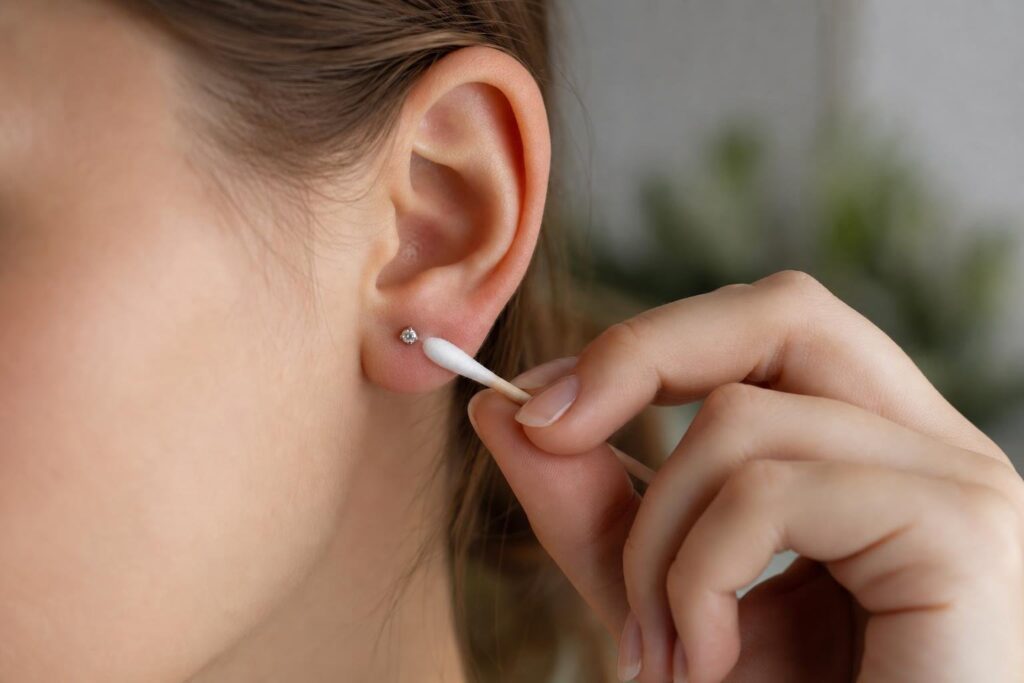
Wait until your piercing is fully healed before changing your jewellery, and choose materials that won’t irritate your skin. Proper ear care extends beyond the initial healing period and requires attention to both the jewellery you select and how you maintain your piercings long-term.
When and How to Change Your Piercing Jewellery
Never change your piercing jewellery before your piercing has completely healed. Lobe piercings typically heal in 6-8 weeks, whilst cartilage piercings can take 3-12 months. Changing jewellery too early can tear the healing tissue and introduce bacteria.
Book a downsizing appointment with your piercer 4-6 weeks after getting pierced. Your piercer will replace the longer initial jewellery with a properly fitted piece that sits closer to your ear. This prevents snagging and promotes better healing.
When you’re ready to change your jewellery yourself, wash your hands thoroughly with antibacterial soap first. Clean both the piercing and the new jewellery before insertion. Gently remove the existing jewellery and insert the new piece without forcing it. If you encounter resistance, don’t push through – visit your piercer for assistance instead.
Selecting Hypoallergenic Materials for Sensitive Ears
Choose implant-grade titanium, 14-carat or 18-carat gold, or surgical steel for your piercing jewellery. These materials minimise allergic reactions and irritation. Titanium is the safest option for sensitive skin because it contains no nickel.
Avoid jewellery containing nickel, which causes allergic reactions in many people. Cheap metals and mystery alloys can lead to infections, rashes, and delayed healing. Even if jewellery claims to be hypoallergenic, check the specific material composition.
Look for jewellery labelled as ASTM F136 titanium or 14-carat solid gold rather than gold-plated options. Gold plating wears off and exposes the base metal underneath, which may irritate your piercings.
Long-Term Aftercare for Healed Piercings
Clean your healed piercings and jewellery regularly to prevent build-up of dead skin cells and oils. Gently wash around your piercings during your daily shower and remove jewellery monthly for thorough cleaning.
Soak your jewellery in warm water with a drop of mild soap, then gently scrub with a soft brush. Rinse thoroughly and dry completely before reinserting. This piercing aftercare tip prevents bacterial growth and keeps your jewellery looking new.
Remove your earrings before swimming in pools or the sea, as chemicals and bacteria can irritate even healed piercings. Sleep on clean pillowcases and avoid touching your piercings with unwashed hands. If you notice swelling, redness, or discharge at any point, these signs suggest infection – consult your piercer or doctor promptly.
Frequently Asked Questions
Proper healing depends on consistent cleaning twice daily with saline solution, avoiding touching or rotating the jewellery, and choosing the right products while steering clear of harsh substances like alcohol or hydrogen peroxide.
How can I help a new ear piercing heal faster?
Keep your hands off your piercing except during cleaning. Touching introduces bacteria that can cause infections and slow down healing.
Clean your piercing twice daily with sterile saline solution. Use a clean cotton pad or gauze to gently remove any crusty discharge around the jewellery.
Get enough sleep and eat a balanced diet rich in vitamins and minerals. Your body heals faster when you’re well-rested and properly nourished.
Avoid sleeping on the side of your new piercing. The pressure can irritate the area and extend your healing time.
What is the best aftercare routine for a new lobe piercing?
Wash your hands thoroughly before touching your piercing. This simple step prevents bacteria from entering the wound.
Spray or apply sterile saline solution to the front and back of your piercing twice daily. Let it sit for a few seconds to soften any crusty material.
Gently pat the area dry with a clean paper towel or gauze. Avoid using cloth towels as they harbour bacteria.
Don’t rotate or twist the jewellery during cleaning. This outdated practice can damage healing tissue and introduce bacteria into the wound.
Which aftercare solution should I use to clean a new ear piercing?
Sterile saline solution is the best choice for cleaning new piercings. You can buy ready-made piercing aftercare spray from chemists or make your own by mixing 1/4 teaspoon of non-iodised sea salt with 240ml of warm distilled water.
Avoid using alcohol, hydrogen peroxide, or antibiotic ointments. These products are too harsh and can damage healing tissue or trap bacteria inside the piercing channel.
Don’t use tea tree oil or other essential oils on fresh piercings. These can cause irritation and allergic reactions that slow healing.
How long does an ear piercing typically take to heal, and when can I change the jewellery?
Lobe piercings typically heal in 6 to 8 weeks. However, complete internal healing can take up to 3 months.
Cartilage piercings take much longer, usually 4 to 12 months to heal fully. Upper ear piercings require more patience than lobe piercings.
Wait until your piercing has completely healed before changing the jewellery. Changing it too early can tear delicate healing tissue and restart the healing process.
Visit your piercer for your first jewellery change if you’re unsure whether it’s healed. They can assess the piercing and change it safely.
What should I do if I develop a bump on my ear piercing?
Keep up with your regular cleaning routine using saline solution twice daily. Many bumps result from irritation and will resolve with consistent aftercare.
Avoid sleeping on the piercing and check that your jewellery isn’t too tight. Pressure and poorly fitted jewellery are common causes of irritation bumps.
Don’t pick at or try to pop the bump. This can introduce infection and make the problem worse.
See a professional piercer or doctor if the bump doesn’t improve after a few weeks. They can determine whether you have an infection, keloid, or other issue that needs treatment.
Which home remedies are safe to use on a healing ear piercing, and which should I avoid?
Sterile saline solution remains the only truly safe home remedy. It’s gentle, effective, and won’t interfere with healing.
Warm saline compresses can help with minor swelling and irritation. Soak a clean gauze pad in warm saline and hold it against your piercing for 5 to 10 minutes.
Avoid aspirin paste, toothpaste, or baking soda mixtures. These substances can burn your skin and cause serious irritation.
Don’t use chamomile tea bags, despite their popularity online. They can harbour bacteria and cause allergic reactions in some people.