Piercing Bumps vs Keloids: Causes, Identification, and Effective Treatments
You notice a small bump forming around your new piercing and wonder if it’s normal or something more serious. Many people develop bumps near their piercings during the healing process, but not all bumps are the same. The main difference between piercing bumps and keloids is that piercing bumps are temporary, raised areas that stay within the piercing site and usually heal on their own, whilst keloids are permanent scars that grow beyond the original wound and require medical treatment.
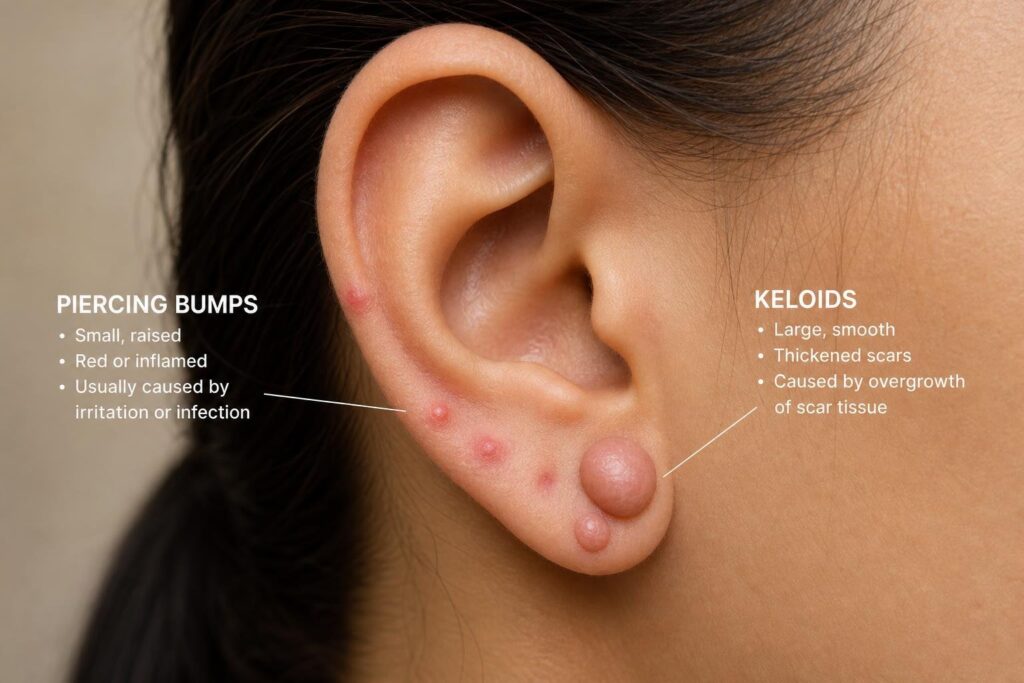
Hypertrophic scars and keloids can look similar at first, which makes it hard to know what you’re dealing with. Piercing bumps typically appear within weeks of getting pierced and remain small and flat. Keloids take longer to form, often appearing months after your piercing, and they continue growing larger over time.
Knowing which type of bump you have affects how you should treat it. Simple piercing bumps often respond well to basic care like keeping the area clean and leaving your jewellery in place. Keloids need professional treatment such as corticosteroid injections or laser therapy to reduce their size.
Key Takeaways
- Piercing bumps are small, temporary raised areas that appear within weeks and stay near the piercing site, whilst keloids are permanent scars that develop months later and grow beyond the original wound
- You can treat most piercing bumps at home by keeping the area clean and avoiding jewellery changes, but keloids require medical treatments like injections or surgery
- Watch for signs of infection such as yellow pus, severe swelling, or fever, which mean you should see a doctor straight away
Understanding Piercing Bumps
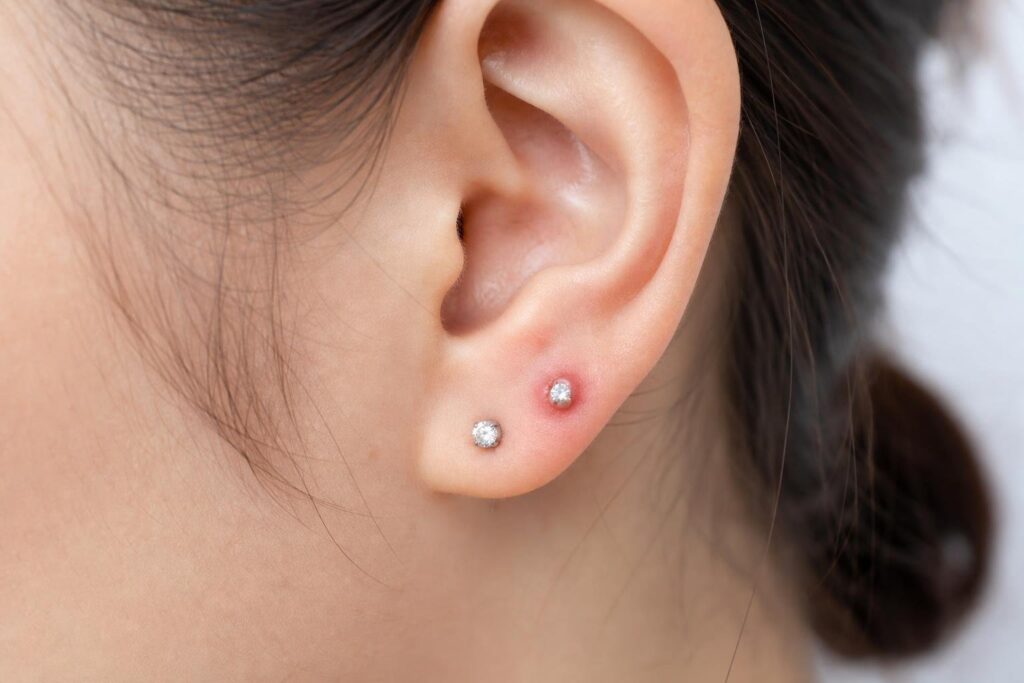
Piercing bumps are small raised areas that develop around new piercings as part of your body’s natural healing response. These bumps typically appear within weeks of getting pierced and usually affect only the immediate piercing site.
What Are Piercing Bumps?
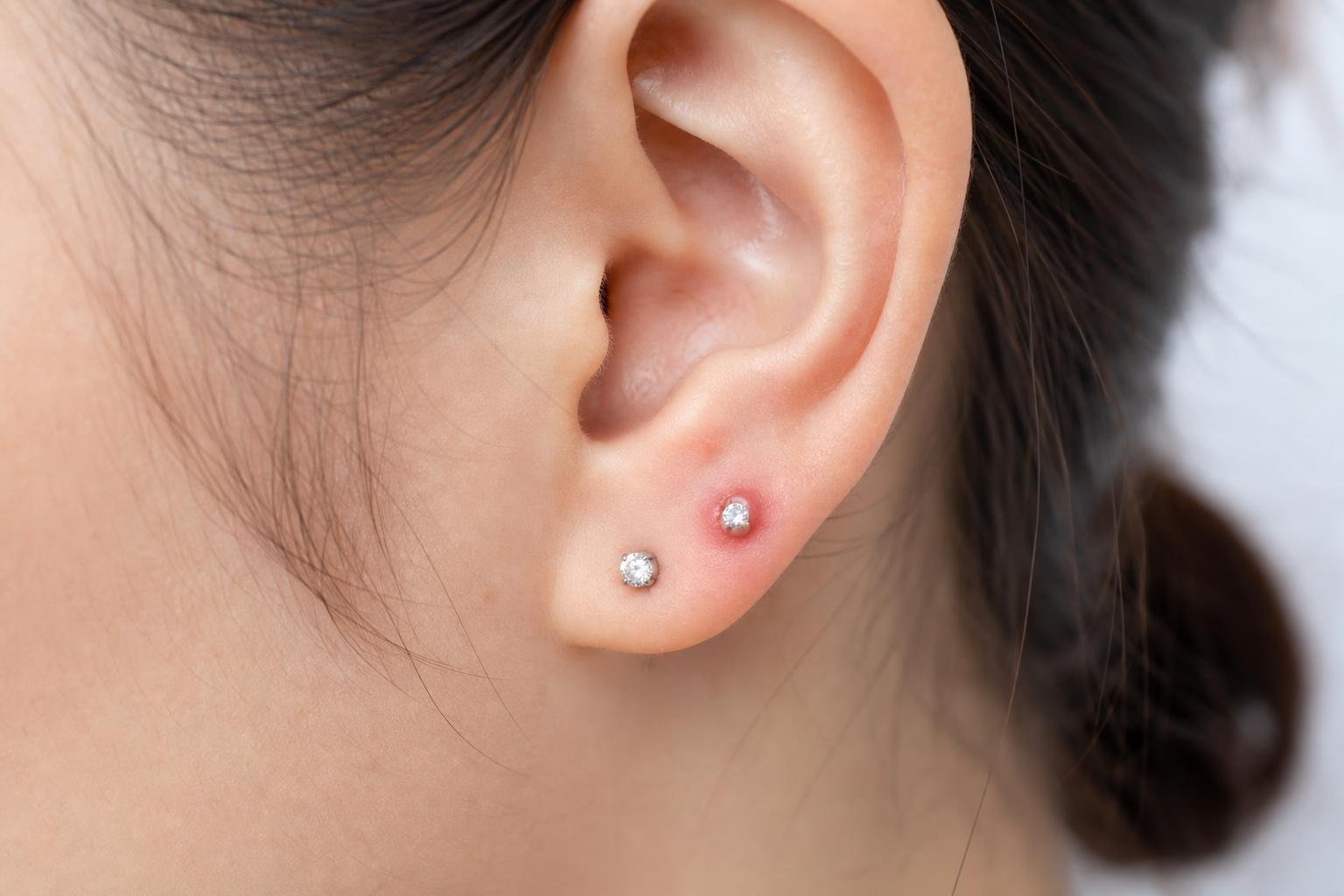
Hypertrophic piercing bumps are small pink or red lumps that form at the piercing site. They develop when your body produces extra tissue during wound healing. This type of bump is sometimes called a hypertrophic scar.
The bump consists of granulation tissue, which is new connective tissue your body creates to heal the wound. Unlike keloids, piercing bumps only affect the pierced area and don’t spread beyond it.
These bumps are common reactions to skin trauma from piercing. Your body treats the piercing as an injury and responds by creating extra tissue to protect and heal the area.
Appearance and Common Symptoms
Piercing bumps are usually flat or slightly raised. They appear pink or red in colour and have a firm texture when you touch them.
Common symptoms include:
- Mild discomfort or itching
- Small size (confined to piercing area)
- Pink or red colouration
- Slightly raised surface
- Firm but not hard texture
The bumps typically appear within a few weeks of getting your piercing. They feel uncomfortable or itchy but shouldn’t cause severe pain. The inflammation usually stays limited to the immediate area around the jewellery.
Typical Causes and Risk Factors
Poor aftercare is one of the main causes of piercing bumps. When you don’t clean your piercing properly or touch it with dirty hands, inflammation can develop.
Contact dermatitis from jewellery metals often triggers these bumps. Nickel and other metals can irritate your skin and cause reactions. Switching to hypoallergenic jewellery made from titanium or surgical steel can help prevent this problem.
Other common causes include:
- Changing or removing jewellery too soon
- Physical trauma or snagging the piercing
- Using harsh cleaning products
- Sleeping on the pierced area
- Swimming in pools or natural water
These factors disrupt piercing healing and trigger your body’s inflammatory response, leading to excess granulation tissue formation.
What Sets Keloids Apart
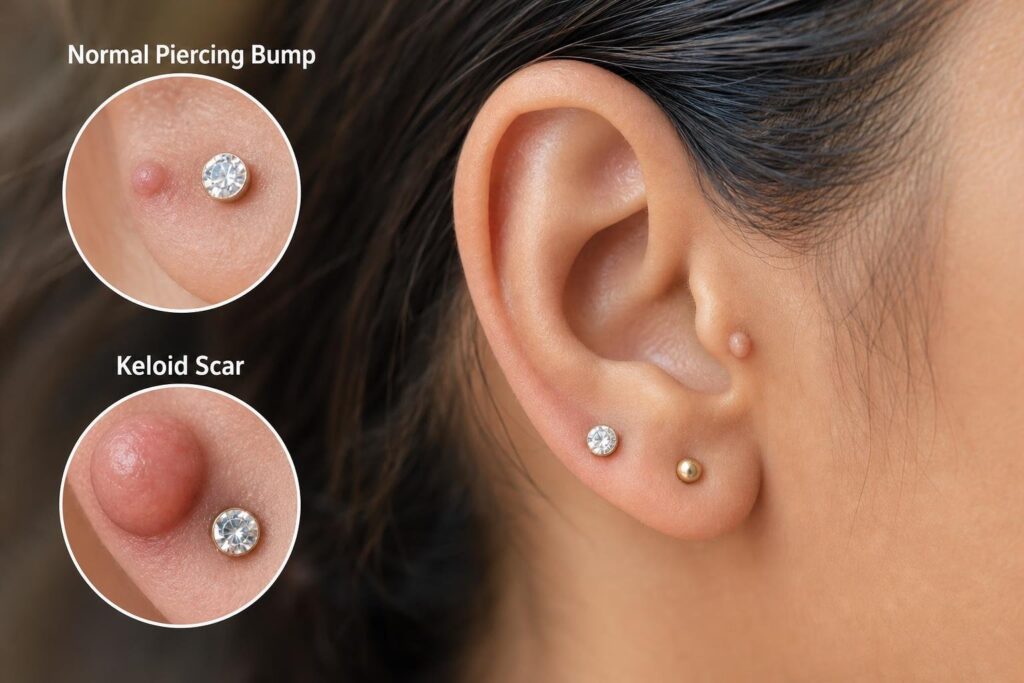
Keloids are distinct from regular piercing bumps because they grow beyond the original wound site and develop due to excessive collagen production during healing. They take longer to appear, feel different to the touch, and won’t go away without medical treatment.
Characteristics of Keloid Scars
Keloid scars are raised growths that form when your skin produces too much collagen after an injury like an ear piercing. They look different from regular piercing bumps in several important ways.
Keloids take 3 to 12 months to develop after your piercing. They start as raised scars that can be pink, red, or darker than your surrounding skin tone. Over time, they often become even darker.
The shape of keloids from ear piercings is usually round, oval, or oblong. Unlike hypertrophic scars that stay within the piercing site, keloids spread beyond the original wound area. They can continue growing for months or even years after they first appear.
The texture varies between keloids. Some feel soft and doughy whilst others feel hard and rubbery. You might also experience pain, itchiness, or tenderness at the keloid site.
Why Do Keloids Form?
Keloids form when cells in your skin called fibroblasts produce excessive collagen during wound healing. This overgrowth of fibrous tissue creates the raised scar instead of normal flat scar formation.
Your body’s normal response to skin trauma involves creating new collagen to repair the wound. With keloids, this healing process doesn’t stop when it should. The fibroblasts keep producing collagen even after the wound has closed, causing the scar to grow larger than the original injury.
The exact reason why some people develop this excessive collagen production isn’t fully understood. Inflammation during the healing process may trigger the overgrowth in people who are prone to keloids.
Who Is at Risk for Keloids?
A family history of keloids is one of the strongest risk factors for developing them. If your parents or siblings have keloids, you’re much more likely to form them after a piercing or other skin trauma.
People with darker skin tones have a higher risk of keloid formation. This includes individuals of African, Asian, and Hispanic descent.
Age also plays a role. Keloids most commonly develop in people between 10 and 30 years old. Young people are more prone to keloid scars than older adults.
Previous keloid formation means you’ll likely develop more keloids from future piercings or injuries. If you’ve had one keloid before, you should be cautious about getting new piercings.
Diagnosis and Key Differences
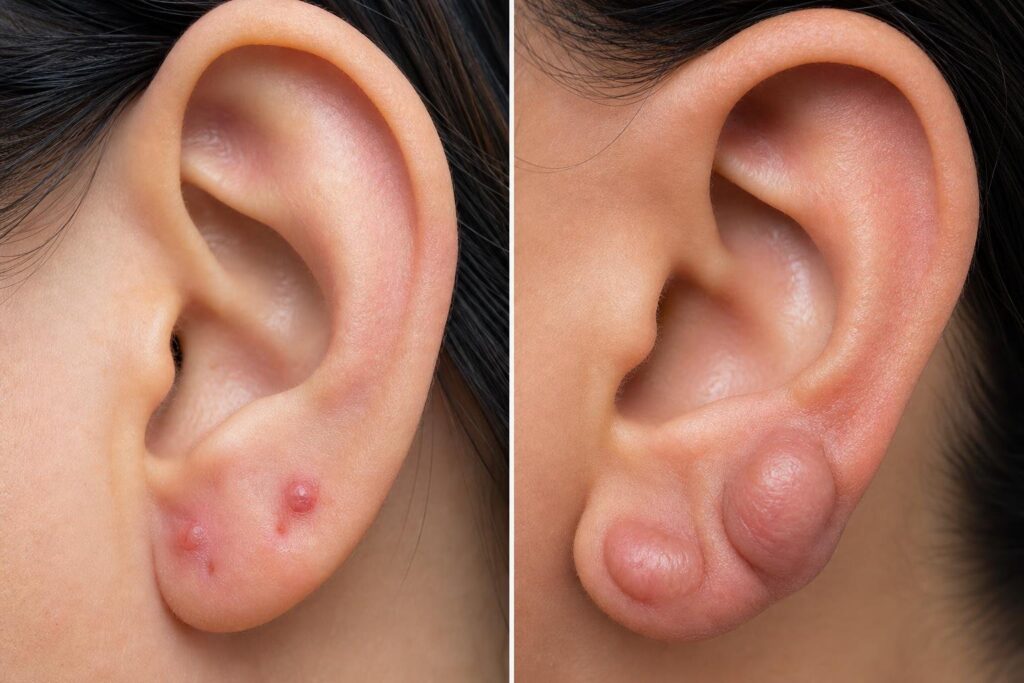
Distinguishing between a piercing bump and a keloid requires looking at specific characteristics like timing, size, and growth patterns. A board-certified dermatologist can provide a definitive diagnosis, especially when complications arise.
Piercing Bump vs Keloid: Signs to Look For
Piercing bumps appear within weeks of getting your piercing and typically stay small. These bumps are flat or slightly raised and usually remain confined to the piercing site. They often involve granulation tissue or inflammation as part of the normal piercing healing process.
Keloids develop much more slowly, taking 3 to 12 months to form after your piercing. They grow beyond the original piercing site and continue expanding over time. The texture varies from soft and doughy to hard and rubbery.
| Characteristic | Piercing Bump | Keloid |
|---|---|---|
| Timing | Weeks after piercing | 3-12 months after piercing |
| Size | Stays small | Grows larger over time |
| Location | Limited to piercing area | Extends beyond piercing site |
| Colour | Pink or red | Pink, red, or darker than skin tone |
Contact dermatitis can also cause bumps around your piercing. This rash develops when jewellery metal, cleaning products, or the piercing equipment irritates your skin.
Seeking Professional Assessment
You should consult a dermatologist if a bump continues growing after several months or extends beyond the piercing area. A board-certified dermatologist can examine the tissue and provide an accurate diagnosis.
Keloids require professional treatment and will not disappear without medical intervention. Your dermatologist can recommend options like corticosteroid injections, which shrink 50% to 80% of keloids, or other treatments such as surgery, laser therapy, or cryotherapy.
Piercing bumps often resolve on their own with proper care. However, if the bump persists beyond 12 to 24 months, professional assessment helps rule out other conditions.
When Infection or Other Complications Occur
Watch for signs of infection that require immediate medical attention. Yellow pus or green pus coming from your piercing indicates bacterial infection. Other warning signs include swelling, throbbing pain, and feeling nauseous.
A granuloma is another possible complication that appears as a small, reddish bump filled with blood vessels. This differs from both keloids and typical piercing bumps.
Contact your healthcare provider if you experience severe pain, fever, or pus discharge. These symptoms suggest your piercing needs medical treatment rather than home care alone.
Treatment Options for Piercing Bumps
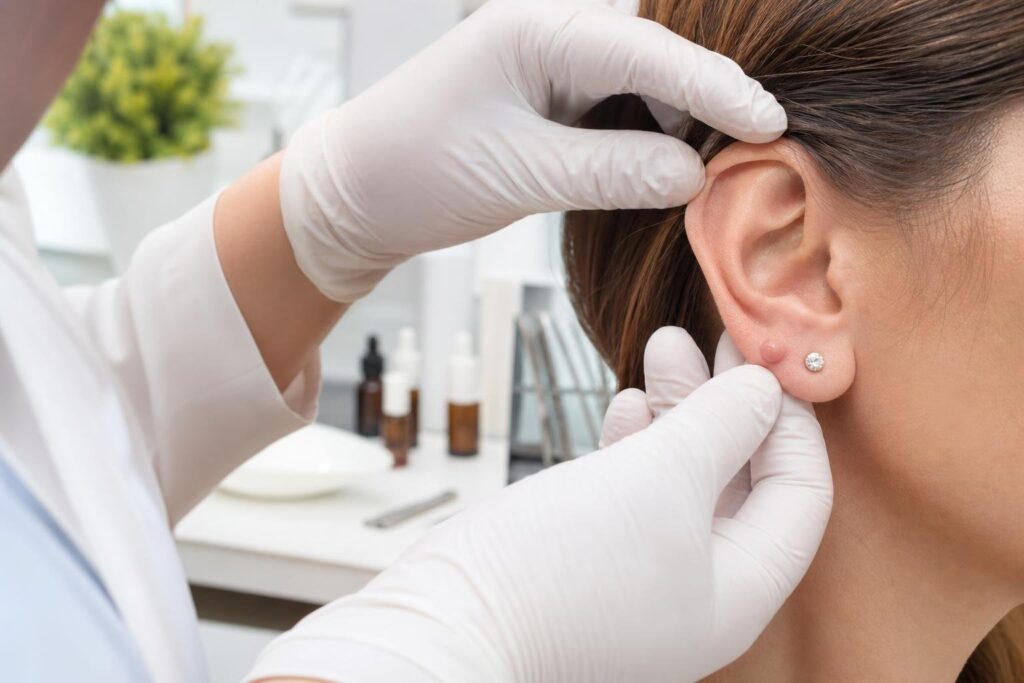
Most piercing bumps respond well to proper home care and will resolve within a few weeks to months. The key is maintaining cleanliness, avoiding irritation, and supporting your body’s natural healing process.
Home Care Strategies
Keep your piercing jewellery in place for at least 6 weeks, even if a bump appears. Removing the jewellery too early can trap bacteria inside and worsen the problem.
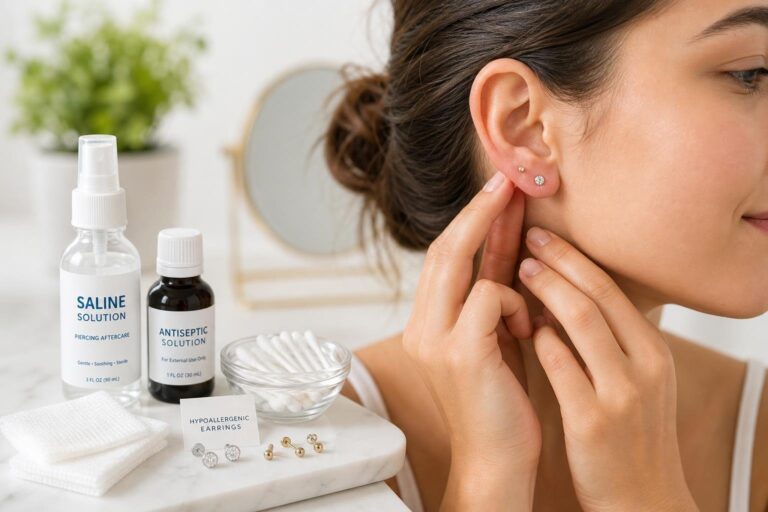
Wash your hands thoroughly before touching your piercing. Clean the area once daily with gentle soap and water or a saline solution. After washing, pat the area dry with a clean cotton pad rather than a towel, which can harbour bacteria.
Avoid poor aftercare practices that slow healing. Don’t use rubbing alcohol or hydrogen peroxide on your piercing, as these harsh products can damage the granulation tissue your body creates during healing. Don’t twist or move the jewellery unnecessarily.
If you suspect a metal allergy is causing the bump, switch to hypoallergenic jewellery made from titanium or surgical steel. Contact dermatitis from certain metals can create bumps that look similar to other piercing complications.
Role of Saline Solution and Warm Compresses
Saline soaks are one of the most effective treatments for piercing bumps. Mix 1/4 teaspoon of non-iodised sea salt with 240ml of warm water. Soak a clean cotton pad in the solution and hold it against your healing piercing for 5-10 minutes, twice daily.
Warm compresses help increase blood flow to the area, which supports healing. The warmth also softens the bump and reduces discomfort. You can combine warm compresses with saline soaks for better results.
Pre-made saline solutions designed for piercings are available if you prefer not to mix your own. These products contain the correct salt concentration and are sterile.
Preventing Piercing Bumps in the Future
Choose an experienced, professional piercer who uses sterile equipment and high-quality jewellery. Poor piercing technique or contaminated tools increase your risk of developing bumps.
Don’t sleep on your new piercing. Pressure and friction during sleep are common causes of irritation bumps. Use a travel pillow or adjust your sleeping position to protect the area.
Avoid swimming pools, hot tubs, and bodies of water during the initial healing period. These environments expose your piercing to bacteria and chemicals that can cause problems.
Leave your jewellery alone except during cleaning. Touching, twisting, or changing your jewellery too soon disrupts the healing process and can trigger bump formation.
Keloid Management and Treatment
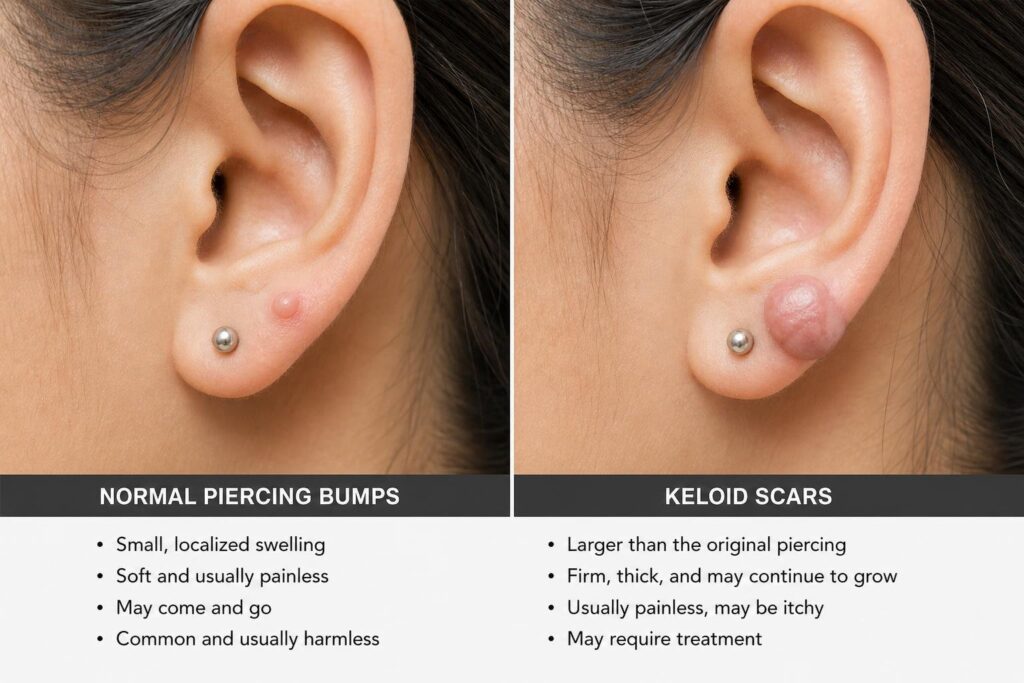
Keloids require professional medical intervention and won’t disappear on their own without treatment. Several proven methods can shrink, flatten, or remove keloid scars, though preventing them from returning often requires ongoing care.
Medical and Professional Interventions
A dermatologist or specialist should evaluate any suspected keloid before starting treatment. They can confirm whether you have a true keloid or a different type of scar that may respond better to other approaches.
Professional treatment for keloid scars typically combines multiple methods for the best results. Your doctor will consider the keloid’s size, location, and how long you’ve had it when choosing a treatment plan. Some keloids respond well to a single approach, whilst others need several different treatments used together.
Timing matters when treating keloids. Starting treatment early often leads to better outcomes than waiting for the keloid to grow larger. Regular follow-up appointments help your doctor monitor progress and adjust your treatment plan if needed.
Corticosteroid Injections and Other Approaches
Corticosteroid injection remains one of the most common and effective treatments, with around 50% to 80% of keloids shrinking after these injections. Your doctor injects the medication directly into the keloid tissue, usually every few weeks over several months.
Silicone gel sheets or silicone gel applied to the keloid can help flatten and soften the scar tissue. You’ll need to wear these consistently for several months to see results.
5-fluorouracil injections offer another option that works by stopping excessive collagen production. Laser treatment, including Nd laser therapy, can help flatten the keloid scar and make it fade. Cryotherapy freezes the keloid tissue to reduce its size, though this method may not suit people with darker skin tones.
Keloid Removal and Reducing Recurrence
Surgical keloid removal can eliminate the scar, but keloids often grow back after surgery. In fact, keloids frequently return even larger than before if surgery is the only treatment used.
Combining surgery with other treatments significantly reduces recurrence rates. Your surgeon might inject corticosteroids into the area immediately after removing the keloid. Some doctors use radiation therapy shortly after surgery to prevent regrowth.
Pressure therapy using special earrings or compression garments after keloid removal can help stop new keloid formation. You’ll typically need to wear these devices for several months following your procedure.
Complications and Preventative Tips
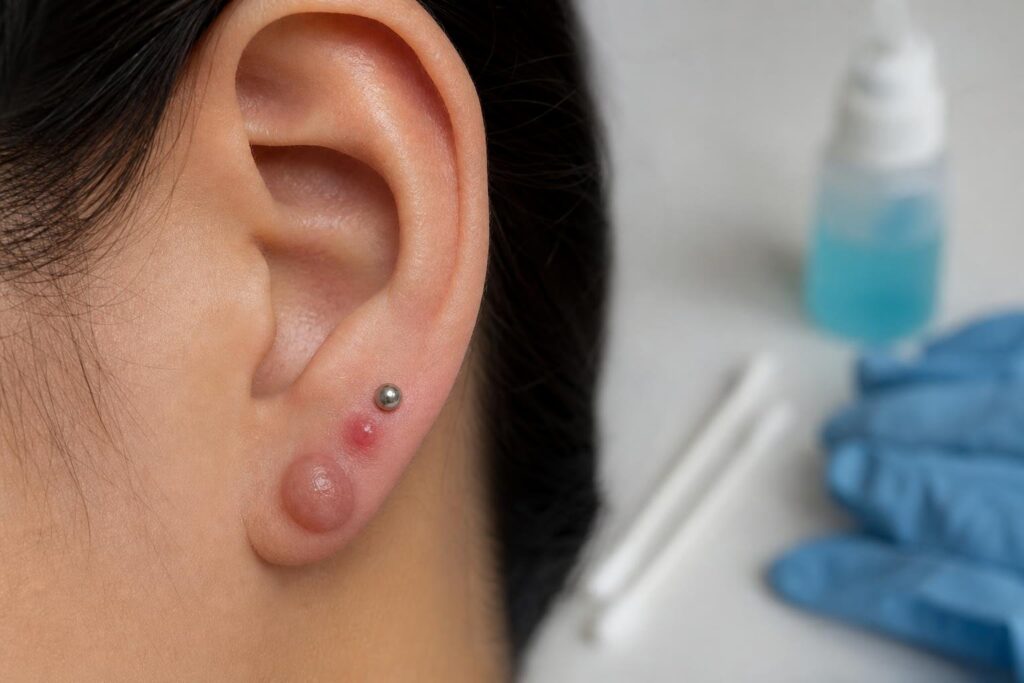
Knowing when to seek professional help and following proper care practices can prevent serious complications. The right jewellery choices and aftercare routine make a significant difference in how your piercing heals.
When to See a Dermatologist
You should contact a board-certified dermatologist if a bump appears and continues growing beyond the piercing site for several months. Keloids can take 3 to 12 months to develop after the initial injury and won’t go away without treatment.
Watch for signs of infection that need immediate attention. These include yellow pus coming from the piercing, severe swelling, intense pain, or feeling unwell with nausea.
A dermatologist can also help if you develop contact dermatitis from your jewellery. Symptoms include fluid-filled blisters, burning sensations, or persistent itching around the piercing. If you have a family history of keloids or previously developed keloid scars, see a dermatologist before getting any new piercings to discuss your risk.
Preventing Scar Formation and Infection
Proper aftercare is your best defence against scar formation. Wash the piercing with saline solution or gentle soap and water once daily, and always wash your hands before touching the area.
Pat the area dry with a clean cotton pad after cleaning. Avoid using towels, which can harbour bacteria and introduce infection to your healing piercing.
Never remove or change your jewellery for at least six weeks after getting pierced. Poor aftercare practices like removing jewellery too early or using harsh products can lead to skin trauma and increase your risk of complications. Don’t use rubbing alcohol or hydrogen peroxide, as these products slow the healing process.
Addressing Jewellery and Aftercare Choices
Your initial jewellery choice significantly affects how well your piercing heals. Hypoallergenic jewellery made from titanium or sterling silver reduces the risk of allergic reactions and contact dermatitis.
If you notice irritation, redness, or bumps forming, your jewellery metal might be the culprit. The metal in needles, piercing guns, or cleaning products can also trigger reactions.
Regular saline soaks help keep the piercing clean and promote healing. Mix sea salt with warm water or purchase sterile saline solution from a pharmacy. Soak the piercing twice daily during the initial healing period. Avoid sleeping on a new piercing, as pressure creates trauma that can lead to bumps or delayed healing.
Frequently Asked Questions
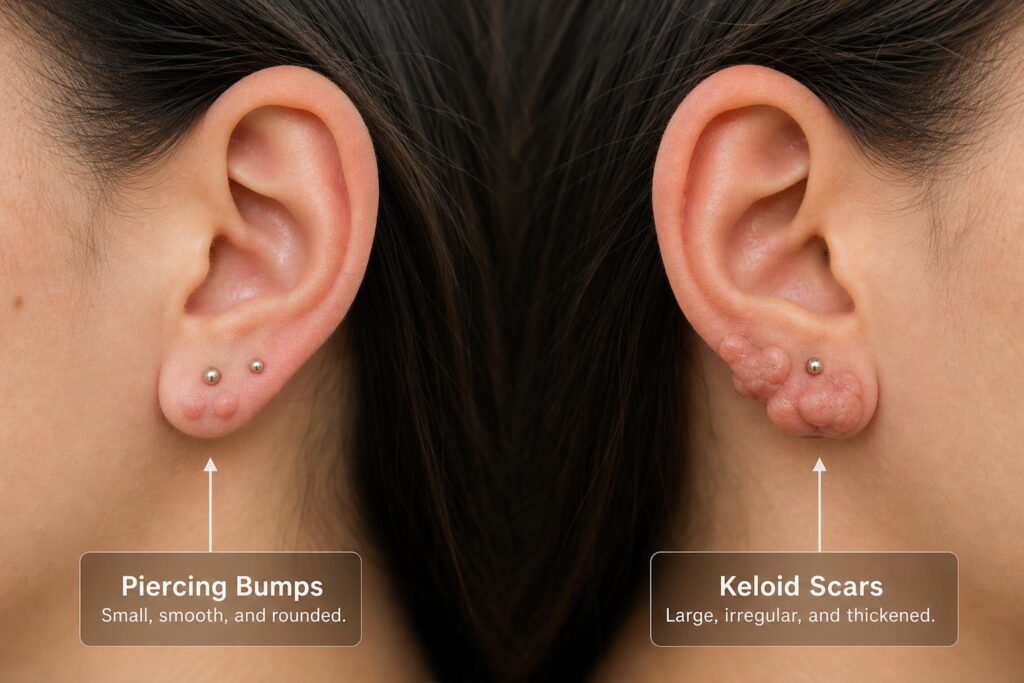
Understanding how to identify and care for bumps near your piercing can prevent complications and help you know when medical attention is needed. These common questions address practical concerns about timing, treatment options, and when to escalate care.
How can you tell the difference between a piercing bump and a keloid scar?
Piercing bumps appear within weeks of getting your piercing and stay flat or slightly raised. They typically remain the same size and only affect the area where the piercing sits.
Keloids take much longer to form, usually appearing 3 to 12 months after your piercing. They grow beyond the original piercing site and continue expanding over time.
The texture also differs between the two. Piercing bumps feel firm but normal, whilst keloids can feel soft and doughy or hard and rubbery.
Colour provides another clue. Piercing bumps stay pink or red and don’t darken much. Keloids start pink or red but often become darker than your surrounding skin tone over time.
What are the most common causes of bumps forming around new or healed piercings?
Physical trauma to your piercing is a leading cause of bumps. This includes snagging the jewellery on clothing, sleeping on the piercing, or touching it with unwashed hands.
Poor-quality jewellery materials trigger reactions in many people. Nickel and other cheap metals cause irritation that leads to bump formation.
Incorrect aftercare practices contribute to bumps as well. Using harsh cleaning solutions like rubbing alcohol or changing your jewellery too early disrupts healing.
Infections from bacteria can cause swollen, painful bumps. These typically produce yellow pus and may come with nausea or fever.
Contact dermatitis occurs when your skin reacts to the metal in your jewellery, the piercing equipment, or cleaning products used during the procedure.
Which at-home aftercare steps are safest for reducing irritation bumps on a piercing?
Leave your jewellery in place for at least 6 weeks without changing or removing it. Taking out your jewellery too early prevents proper healing and can worsen bumps.
Wash your hands thoroughly before touching your piercing. This prevents transferring bacteria to the healing area.
Clean your piercing once daily with a saline solution or gentle soap and water. Over-cleaning can actually irritate the area and slow healing.
Pat the piercing dry with a clean cotton pad after washing. Avoid using towels, which harbour bacteria that can infect your piercing.
Don’t use rubbing alcohol or hydrogen peroxide on your piercing. These harsh products slow down the healing process.
When should you stop using saline soaks and seek professional advice for a persistent bump?
Contact a doctor if your bump hasn’t improved after using proper aftercare for several weeks. Piercing bumps can last up to 12 to 24 months, but a healthcare professional can assess whether your treatment plan needs adjustment.
Seek medical attention immediately if you notice signs of infection. Yellow pus, severe swelling, persistent pain, or feeling unwell all require professional evaluation.
If your bump continues growing larger over time, you may have a keloid rather than a temporary irritation bump. Without treatment, keloids don’t go away and will keep expanding.
Stop home treatment and see a dermatologist if you develop severe itching, burning sensations, or fluid-filled blisters. These symptoms may indicate contact dermatitis or an allergic reaction requiring different treatment.
What treatments are typically recommended by clinicians for keloids caused by piercings?
Corticosteroid injections are a primary treatment option for keloids. These medications help shrink the scar, with 50% to 80% of keloids reducing in size after injection.
Surgical removal is available for larger keloids. However, keloids can return even after surgery, so this option often combines with other treatments.
Laser treatment helps flatten keloid scars and reduce their colour. This method works well for people who want to minimise the keloid’s appearance.
Cryotherapy freezes the keloid to soften it and shrink its size. This treatment may not suit people with darker skin tones due to potential discolouration.
Your doctor will recommend treatment based on your keloid’s size, location, and how long you’ve had it. Some people need multiple treatments or a combination of methods for best results.
Can changing jewellery material or size help prevent bumps, and what options are best for sensitive skin?
Switching to hypoallergenic metals often eliminates bumps caused by allergic reactions. Titanium and sterling silver are excellent choices for sensitive skin.
The size and weight of your jewellery matter too. Heavy or oversized pieces put pressure on your piercing and can cause irritation bumps.
Wait until your piercing fully heals before changing jewellery. Changing too early introduces bacteria and disrupts tissue formation.
Avoid jewellery containing nickel, as this metal causes reactions in many people. Even “hypoallergenic” pieces may contain trace amounts that trigger sensitivity.
If you develop contact dermatitis symptoms like itching, burning, or blisters around your jewellery, replace it with a different material. Your piercer can help you select appropriate alternatives for your skin type.