
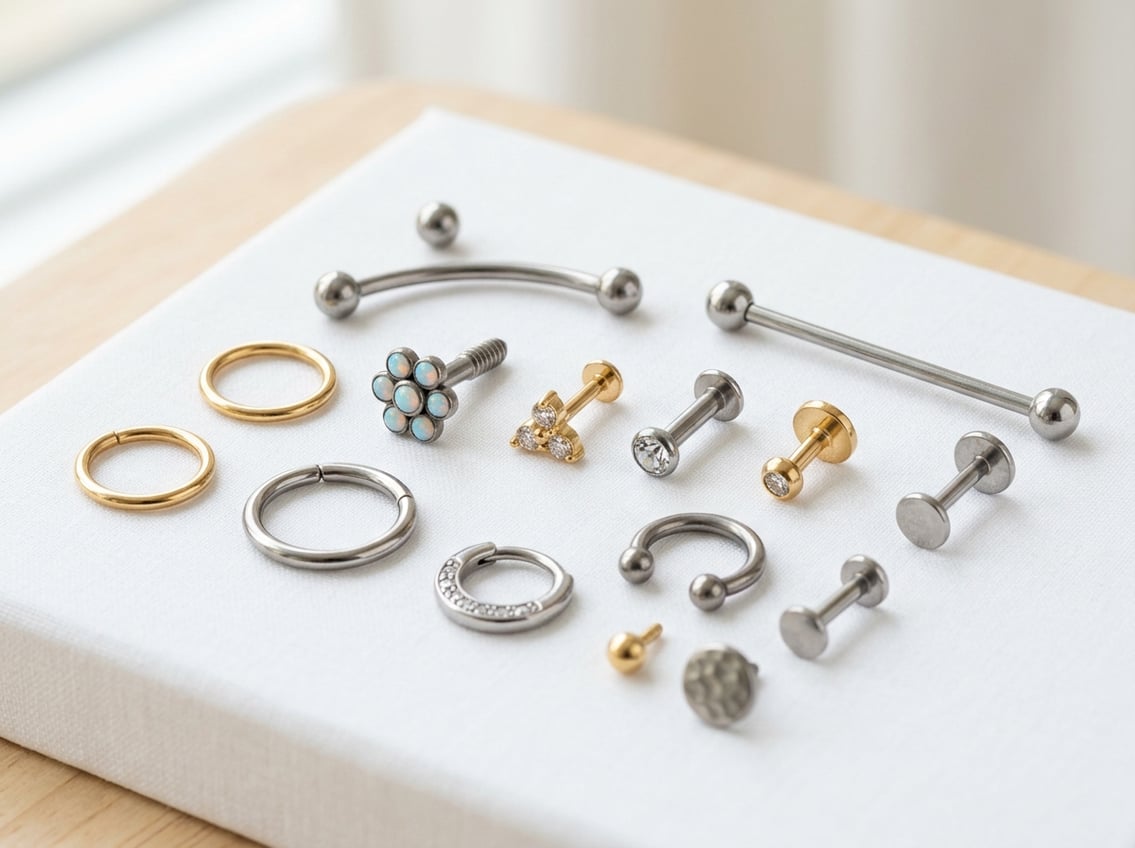
Implant-Grade Titanium, Surgical Steel, and Gold Compared
Choosing the right material for your piercing jewellery affects how quickly you heal, how comfortable you feel, and whether you develop irritation or allergic reactions. The three most common materials you’ll encounter are implant-grade titanium, surgical steel, and gold, but they’re not interchangeable and each serves different purposes.
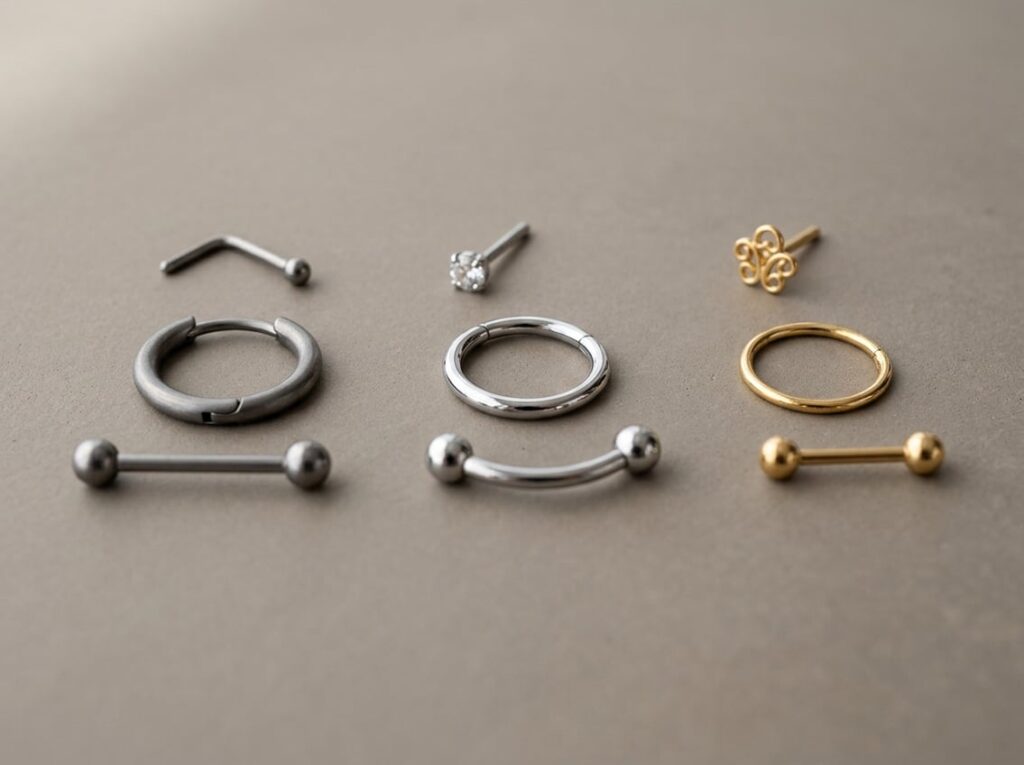
Implant-grade titanium is the safest choice for new piercings because it contains zero nickel, weighs 40% less than steel, and your body won’t reject it—whilst surgical steel works well for healed piercings in people without metal allergies, and solid 14K or 18K gold offers a premium option that’s heavier and more expensive. Understanding which material suits your situation depends on whether your piercing is fresh or healed, your skin sensitivity, and your budget.
Professional piercers and the Association of Professional Piercers recommend specific implant-grade materials that meet strict safety standards. This guide breaks down exactly what makes each metal different, when to use which material, and how to avoid common problems with body jewellery that can delay healing or cause reactions.
Key Takeaways
- Implant-grade titanium is nickel-free and biocompatible, making it the best choice for fresh piercings and sensitive skin
- Surgical steel contains 8-12% nickel and works well for fully healed piercings in people without allergies
- Solid 14K or 18K gold is safe for piercings but costs more and weighs more than titanium
Material Standards and Terminology Explained

Piercing jewellery certifications identify materials that meet strict medical-grade requirements, with specific codes like ASTM F136 and ASTM F-138 indicating exact chemical compositions tested for human implantation. Understanding these standards helps you identify truly hypoallergenic materials and avoid nickel sensitivity issues.
What Makes Jewellery Implant-Grade
Implant-grade jewellery meets the same material standards used for surgical implants placed inside the human body. These materials undergo rigorous testing to prove they won’t cause allergic reactions or release harmful substances when in contact with your tissue.
ASTM F136 titanium represents the gold standard for new piercings. This titanium alloy contains trace amounts of aluminium and vanadium but absolutely no nickel, making it completely hypoallergenic.
ASTM F-138 refers to 316LVM stainless steel, where the “VM” indicates vacuum melting for higher purity. Whilst this surgical steel contains trace nickel (typically 8-12%), the metal binds it tightly enough that most people won’t react.
ASTM F-67 covers commercially pure titanium with four different grades. Grade 23 (also called Ti-6Al-4V ELI) matches F136 specifications and appears in certified titanium piercing jewellery.
The term “surgical steel” without ASTM certification means nothing legally. Only jewellery marked with specific ASTM codes guarantees you’re getting implant-grade material.
ASTM and ISO Certifications Demystified
ASTM International and ISO create the testing standards that define implant-grade materials. When you see these codes on jewellery, they represent legally enforceable specifications rather than marketing claims.
ASTM F-136 certification specifies exact chemical composition limits for titanium alloy. ISO 5832-3 covers the same titanium alloy under international standards. Both certifications prove the material matches what surgeons use for hip replacements and dental implants.
ASTM F-138 and ISO 5832-1 both define 316LVM surgical steel specifications. These standards limit carbon content to 0.03% maximum, creating the “L” (low carbon) designation that prevents corrosion.
Reputable suppliers provide Mill Test Certificates showing batch-specific test results. These certificates list the actual chemical composition and confirm ASTM or ISO compliance for each production run.
Professional piercing organisations like the APP only approve ASTM F136 titanium and ASTM F-138 steel for initial piercings. Other materials don’t meet their safety standards.
Understanding Nickel Content and Sensitivity
Nickel allergy affects 10-20% of the population and causes contact dermatitis around piercings. Your immune system treats nickel as a threat, creating redness, itching, and fluid discharge.
316L surgical steel contains 8-12% nickel by composition. The chromium content creates a protective layer that prevents most nickel from leaching out, but some people still react.
Implant-grade titanium (ASTM F136 or F-67) contains zero nickel. You cannot develop nickel sensitivity from these materials, making them the safest choice if you’ve experienced allergic reactions to other jewellery.
Nickel sensitivity develops through repeated exposure. Your first piercing might heal fine with surgical steel, but later piercings could trigger reactions as your immune system becomes sensitised.
| Material | Nickel Content | Allergy Risk |
|---|---|---|
| ASTM F136 Titanium | 0% | None |
| ASTM F-138 Steel | 8-12% | Low to moderate |
| Standard Stainless Steel | 10-14% | High |
If you’ve had reactions to costume jewellery or belt buckles, choose ASTM F136 titanium for all your piercings. Previous nickel sensitivity makes future allergic reactions more likely with any nickel-containing material.
Titanium Jewellery: The Gold Standard for New Piercings
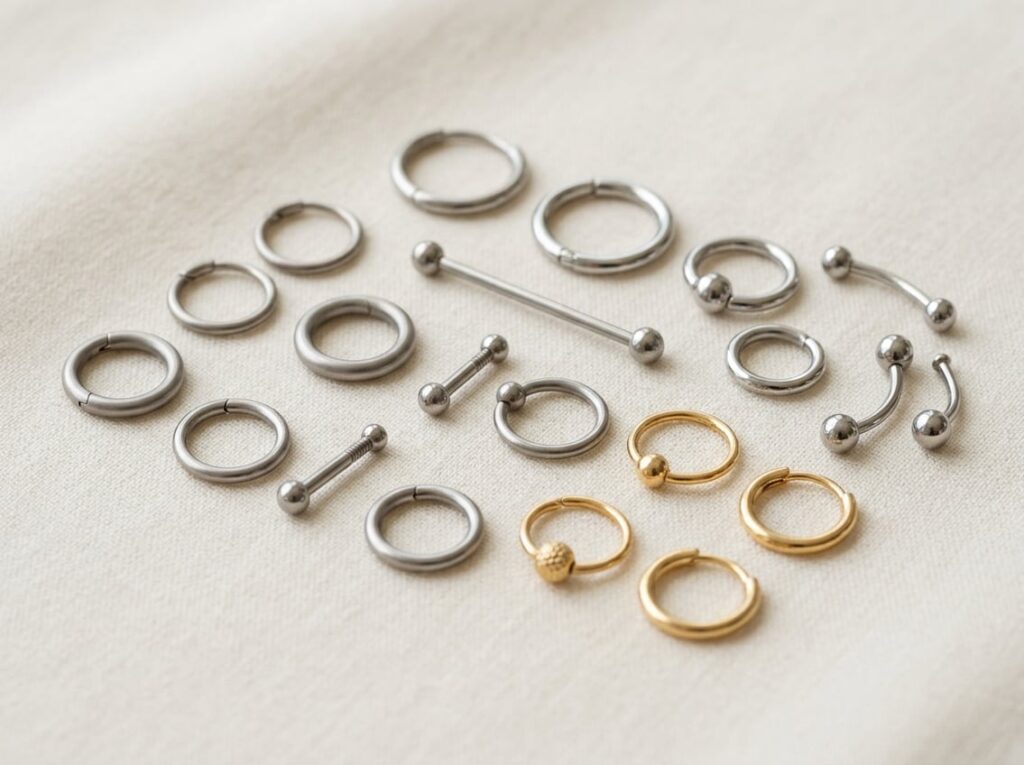
Implant-grade titanium has become the preferred material among professional piercers worldwide due to its exceptional biocompatibility and near-zero allergy risk. This medical-grade metal offers unmatched safety for healing piercings whilst remaining lightweight and durable enough for long-term wear.
Benefits of Implant-Grade Titanium
Implant-grade ASTM F136 titanium is the same material used in surgical implants, hip replacements, and dental work. Your body won’t reject it because it contains absolutely no nickel, lead, or cadmium—common allergens found in other metals.
The material is remarkably lightweight, weighing approximately 45% less than surgical steel. This makes a noticeable difference in cartilage piercings, septum rings, and larger statement pieces where excess weight can cause irritation or migration.
Titanium body jewellery won’t tarnish, corrode, or discolour over time, even when exposed to body fluids during the healing process. You can wear it 24/7 without needing to remove it for cleaning or maintenance. The material’s strength means it resists bending and breaking whilst remaining gentle on healing tissue.
Titanium Grades and Colour Options
Two main grades meet medical standards for body jewellery:
| Grade | Standard | Use |
|---|---|---|
| ASTM F-136 | ISO 5832-3 | Body implants and piercings |
| ASTM F-67 | Commercial grade | Some body jewellery |
ASTM F136 titanium is the superior choice as it’s specifically designed for permanent body implants.
Anodized titanium offers vibrant colour options including gold, rose gold, blue, purple, and rainbow. This process uses electricity to alter the metal’s surface without any coatings or plating. The colours are permanent and won’t chip or fade with wear, giving you the aesthetic appeal of precious metals without the added cost or weight.
Ideal Use Cases: Sensitive Skin and Fresh Piercings
If you have sensitive skin or known metal allergies, titanium for piercings is essential rather than optional. True titanium allergies are virtually non-existent in medical literature, making it the safest choice available.
For fresh piercings, professional piercers almost universally recommend implant-grade titanium. It promotes faster healing by reducing inflammation and irritation around the piercing site. You’re less likely to develop bumps, prolonged healing times, or complications when starting with proper materials.
Titanium jewellery works particularly well for facial piercings like nose studs and septum rings where any irritation is immediately noticeable. Cartilage piercings also benefit from the reduced weight, as heavier materials can cause the piercing angle to shift during healing.
Surgical Steel Jewellery: Pros, Cons, and Best Uses

Surgical steel contains nickel alloys that make it affordable and durable, but 316L surgical steel typically includes 8-12% nickel content that can trigger reactions in sensitive individuals. Understanding the different grades and when surgical steel works best helps you decide if it’s right for your piercing.
Types of Surgical Steel for Body Piercings
The most common type of surgical steel jewellery uses 316L stainless steel, which contains chromium, nickel, and molybdenum for corrosion resistance. The “L” designation indicates lower carbon content, which reduces the risk of carbide precipitation during welding.
316LVM surgical steel represents a higher quality option. The “VM” stands for “vacuum melt,” meaning the steel undergoes additional purification processes. This grade meets ASTM F138 and ISO 5832-1 standards, making it closer to implant-grade steel used in some medical devices.
Not all surgical steel jewellery meets these standards. Many pieces labelled “surgical steel” don’t specify their grade or composition. Implant-grade materials that meet strict medical standards offer better quality assurance than generic surgical steel body jewellery.
When shopping for surgical steel jewelry, look for specific grade markings like 316LVM, ASTM F138, or ISO 5832-1. These certifications indicate the steel meets higher purity and safety standards than unmarked pieces.
Nickel Content and Suitability
All grades of surgical steel contain approximately 8-14% nickel, which serves as a stabilising agent in the alloy. This nickel content presents the biggest drawback of surgical steel jewellery for body piercings.
Nickel sensitivity affects 10-20% of the population and can develop over time with repeated exposure. Wearing nickel-containing jewelry in a healing piercing increases your risk of developing this cumulative allergy.
Reactions to surgical steel jewelry can include:
- Itching or redness around the piercing site
- Bumps or persistent irritation
- Prolonged healing times
- Allergic contact dermatitis
Surgical steel works well for fully healed piercings in people without known metal allergies. If you’ve worn surgical steel earrings or other jewellery without issues, you likely tolerate it fine. However, avoid surgical steel for fresh piercings or if you have sensitive skin.
When to Choose Surgical Steel Over Titanium
Surgical steel makes sense in specific situations where its benefits outweigh the nickel risk. Price represents the main advantage—surgical steel typically costs 20-40% less than titanium jewellery.
Choose surgical steel if your piercing has fully healed (6+ months old) and you have no history of metal allergies or reactions. Surgical steel offers durability and scratch-resistance with proper care, plus it maintains a bright, reflective silver finish that many people prefer.
Budget-conscious buyers building large jewellery collections often select surgical steel for healed piercings. The lower price point allows you to purchase trendy pieces you’ll swap out frequently without significant investment.
Surgical steel works particularly well for healed earlobe piercings and other low-stress areas. The material’s weight and nickel content matter less in fully healed piercings that aren’t prone to irritation. However, titanium remains the superior choice for new piercings, sensitive skin, and anyone prioritising comfort over cost savings.
Gold and Alternative Materials in Piercing Jewellery
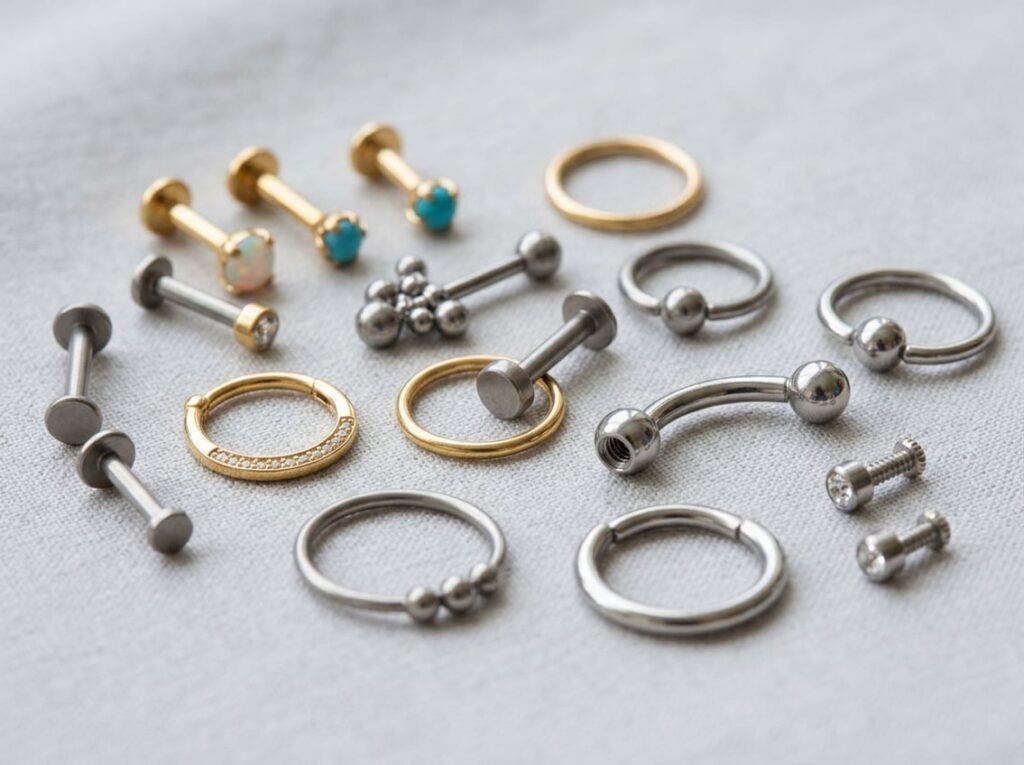
Gold jewellery offers a premium option for piercings when you choose the right type, whilst materials like niobium, Bioplast, and PTFE provide alternatives for specific situations. Understanding which metals are safe and which to avoid protects your healing piercing from irritation and complications.
Safe Types of Gold for Jewellery
Only 14-karat or 18-karat gold is safe for piercings. Lower karat gold contains too many alloy metals that can irritate your skin.
14K and 18K gold are ideal for long-term wear in healed piercings. These options contain enough pure gold to be biocompatible whilst remaining durable enough for daily use. 14-karat gold contains 58.3% pure gold, whilst 18-karat gold contains 75% pure gold.
Yellow gold, white gold, and rose gold are all acceptable if they meet the karat requirements. White gold often contains nickel in its alloy mix, which can cause reactions in sensitive individuals. Rose gold uses copper as its primary alloy metal, making it a safer choice for those with nickel allergies.
Gold jewellery costs more than titanium or steel. The higher price reflects the material’s value and the craftsmanship required to create piercing-safe pieces. Gold works well for clickers and other decorative jewellery in healed piercings.
Never use gold-plated jewellery in piercings. The plating wears off quickly, exposing base metals underneath that may cause reactions.
Niobium, Bioplast, and PTFE Explained
Niobium is a pure elemental metal similar to titanium. It’s completely hypoallergenic and biocompatible, making it safe for fresh piercings. Niobium can be anodised to create different colours, from bright blues to deep purples.
The metal is slightly heavier than titanium but still lighter than surgical steel. Niobium works well for people with multiple metal sensitivities.
Bioplast is a flexible plastic material used for temporary piercing jewellery. It’s soft and can be cut to custom lengths, which makes it useful during medical procedures like X-rays or MRI scans. Bioplast isn’t suitable for long-term wear in fresh piercings because it can harbour bacteria in its porous surface.
PTFE (polytetrafluoroethylene) is another flexible plastic option. It’s non-reactive and autoclavable, meaning it can be properly sterilised. PTFE works well for pregnancy-related jewellery changes when metal pieces become uncomfortable.
Both Bioplast and PTFE should only be used as temporary solutions. They don’t promote healing as well as implant-grade metals and require more frequent cleaning.
Risks of Non-Implant-Grade Metals
Cheap metals cause most piercing complications. Mystery metals, fashion jewellery, and non-certified materials can contain harmful substances like lead, cadmium, or excessive nickel.
Standard surgical steel contains trace amounts of nickel, which can trigger allergic reactions in sensitive individuals. Only implant-grade surgical steel certified to meet ASTM F136 standards is safe for fresh piercings.
Brass, copper, and silver oxidise when exposed to body fluids. This oxidation creates a green or black discolouration on your skin and inside the piercing channel. These metals also release particles that irritate healing tissue.
Nickel allergies develop over time with repeated exposure. Starting with nickel-containing jewellery in a fresh piercing increases your risk of developing a permanent sensitivity. Once you develop a nickel allergy, you’ll react to trace amounts in many everyday items.
Costume jewellery and fashion pieces never belong in piercings. These items aren’t designed to be worn inside your body and can cause infections, rejections, or permanent scarring.
Making the Right Choice for Your Piercing’s Healing Stage
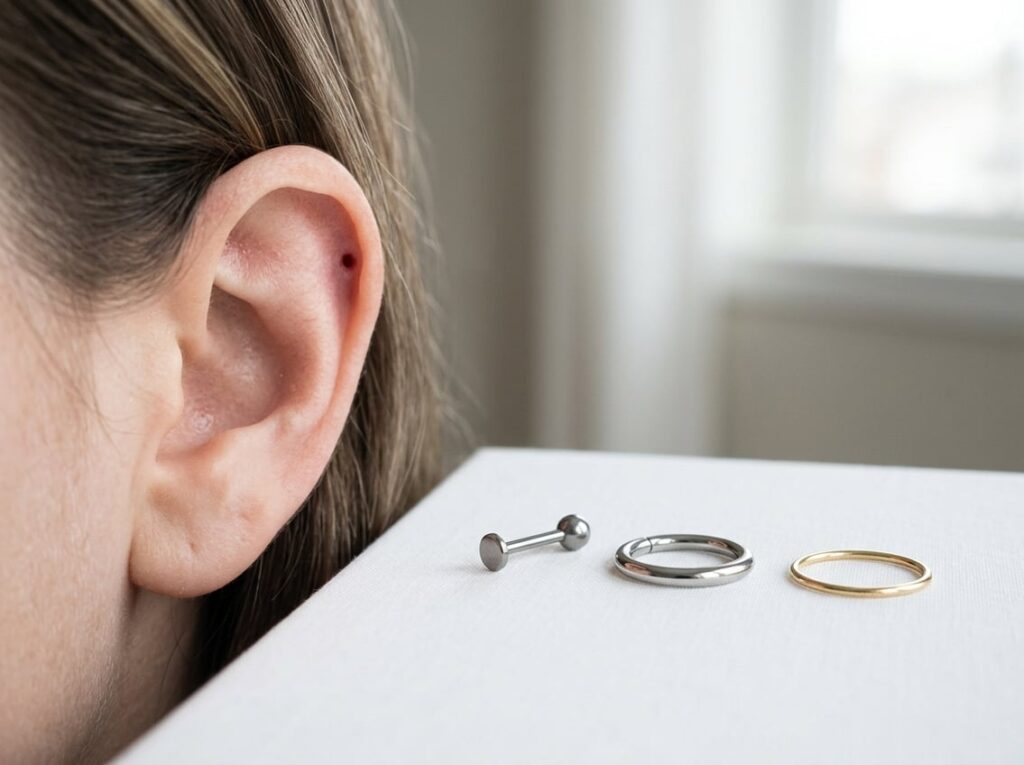
The metal you choose depends heavily on whether your piercing is new or fully healed. Fresh piercings require biocompatible materials that minimise irritation, while healed piercings allow for more flexibility in your jewellery choices.
Recommended Materials for Initial Piercings
Implant-grade ASTM F136 titanium is the safest option for new piercings. This medical-grade material contains less than 0.05% nickel, making it virtually hypoallergenic and ideal for sensitive skin. Its lightweight nature reduces pressure on fresh tissue, which supports faster healing and less inflammation.
14-karat or 18-karat gold also works well for initial piercings, but only when it’s solid gold rather than plated. The gold must be nickel-free to prevent allergic reactions during the healing process.
Surgical steel is not recommended for fresh piercings if you have nickel sensitivities. Whilst it meets international safety standards limiting nickel release to 0.2 µg/cm²/week, this amount can still trigger reactions in some people. For those with severe nickel allergies, titanium remains the top choice.
Best materials for initial piercings:
- ASTM F136 implant-grade titanium
- 14-karat or 18-karat solid gold (nickel-free)
- Niobium (similar properties to titanium)
Healed Piercings: Expanding Material Options
Once your piercing has fully healed, you gain more freedom in material selection. 316L surgical steel becomes a fantastic option for healed piercings due to its durability and polished finish. It’s highly corrosion-resistant and perfect for everyday wear.
Gold jewellery offers luxury appeal for healed piercings. Both 14-karat and 18-karat gold provide excellent biocompatibility whilst allowing for intricate designs. These options work well for those wanting to invest in long-term pieces.
You can still wear titanium in healed piercings. Its hypoallergenic properties make it suitable for any healing stage, and PVD coatings add colour options without compromising safety.
Most people tolerate surgical steel well in healed piercings, but watch for any signs of irritation. If redness or itching develops, switch back to titanium or gold.
Special Considerations for Cartilage and Helix Piercings
Cartilage and helix piercings take longer to heal than lobe piercings, typically requiring 6 to 12 months. This extended healing time makes material choice even more critical for these areas.
Implant-grade titanium works best for cartilage piercings because it’s exceptionally lightweight. Heavy jewellery can cause migration or irritation in cartilage tissue, which heals more slowly than soft tissue. The reduced weight minimises stress on the piercing site.
Avoid changing your cartilage jewellery too frequently during healing. Each change introduces bacteria and disturbs the healing tissue. Stick with your initial titanium piece until complete healing occurs.
Helix piercings benefit from flat-back labret studs in titanium rather than hoops during healing. The stable design prevents catching on hair or clothing, which commonly irritates these piercings.
Identifying and Managing Metal Allergies in Piercing Jewellery
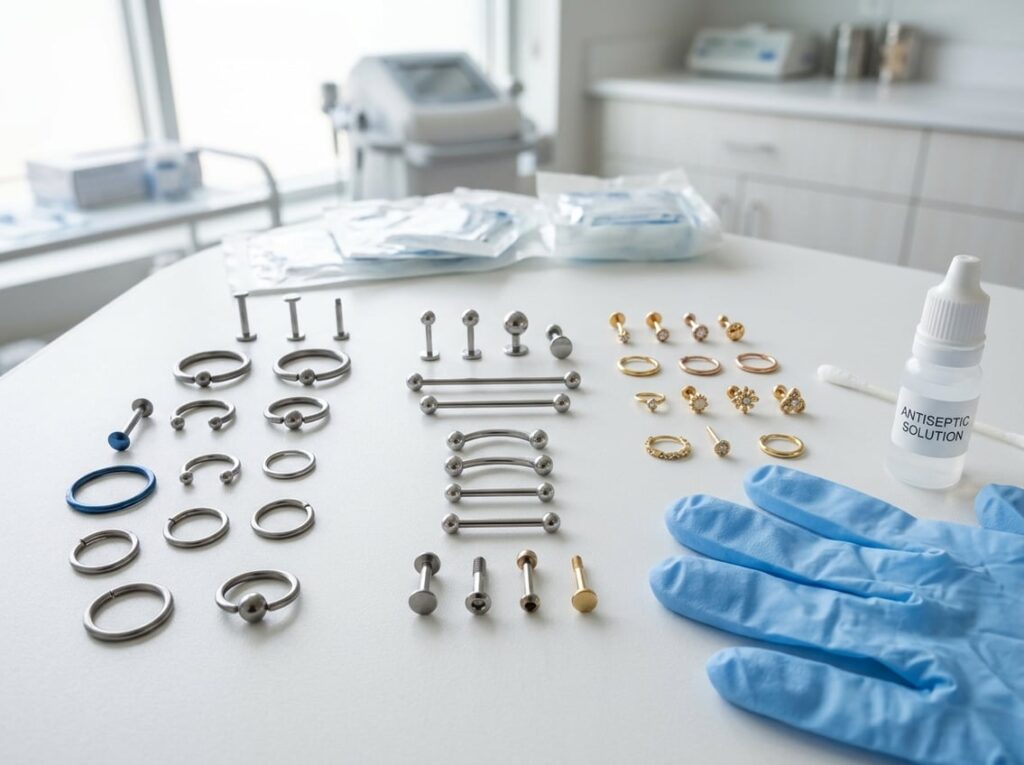
Metal allergies affect 10-20% of the population, with nickel being the most common culprit in piercing jewellery reactions. Recognising symptoms early and switching to appropriate materials can prevent long-term skin damage and allow your piercings to heal properly.
Recognising Symptoms of Nickel Allergy
Nickel allergy presents as allergic contact dermatitis, an immune response that differs from infection or simple irritation. Your body treats nickel ions as foreign invaders, triggering an inflammatory response.
Common symptoms include:
- Intense itching around the piercing (often worse at night)
- Redness spreading beyond the immediate piercing site
- Small bumps or blisters that may ooze clear fluid
- Dry, scaly patches developing near the jewellery
- Burning sensation that persists whilst wearing certain metals
The timing matters when identifying nickel sensitivity. Allergic reactions typically appear within hours to days of contact, whilst infections develop over weeks. You can also develop a nickel allergy after years of wearing jewellery without problems—this delayed sensitisation catches many people off guard.
Key difference: Infections cause throbbing pain and yellow-green discharge. Allergies cause relentless itching and clear fluid. If you experience fever, severe swelling, or pus, you’re dealing with infection rather than metal sensitivity.
Tips for Preventing Allergic Reactions
Prevention starts before you get pierced. Request implant-grade titanium (ASTM F-136) for initial piercings, as this material contains zero nickel and suits even highly sensitive skin.
Avoid surgical steel entirely if you have known metal sensitivities. Despite its medical-sounding name, surgical steel contains 10-14% nickel and frequently triggers contact dermatitis.
Safe material options:
| Material | Nickel Content | Sensitivity Risk |
|---|---|---|
| Implant-grade titanium | 0% | None |
| Niobium | 0% | None |
| 14K+ solid gold | Trace amounts | Very low |
| Surgical steel | 10-14% | High |
When shopping for jewellery, verify certification documents. Look for “ASTM F-136” or “ISO 5832-3” markings on titanium pieces. Avoid gold-plated items—the nickel-containing base metal will eventually show through and contact your skin.
Steps to Take if Sensitivity Occurs
Remove the problematic jewellery immediately if your piercing has fully healed. For fresh piercings under six months old, consult your piercer before removal to prevent the hole from closing.
Clean the affected area twice daily with sterile saline solution. Avoid alcohol, hydrogen peroxide, or harsh soaps that can further irritate sensitised skin.
Apply over-the-counter hydrocortisone cream (1%) around—not inside—the piercing to reduce inflammation. Oral antihistamines can help control itching whilst your skin recovers.
Replace your jewellery with hypoallergenic materials like implant-grade titanium or niobium. Wait 3-5 days for symptoms to improve before inserting new jewellery. If redness, swelling, or itching persists beyond five days, schedule an appointment with your GP or dermatologist. They can perform patch testing to identify specific metal sensitivities and prescribe stronger topical treatments if needed.
Frequently Asked Questions
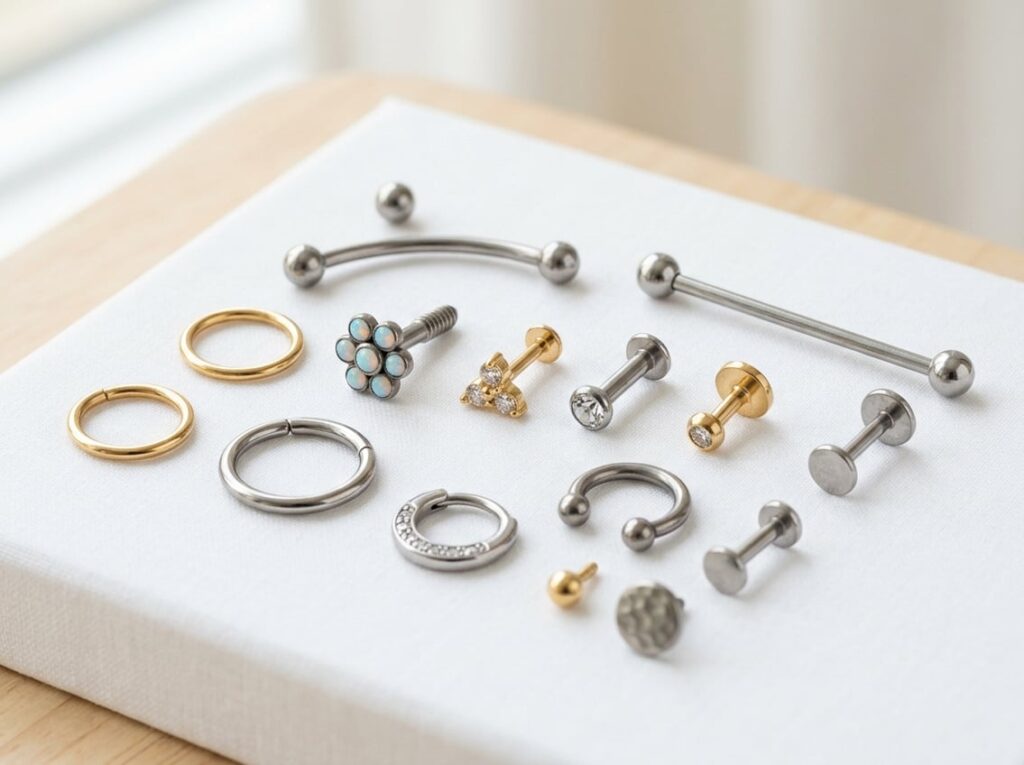
Titanium is completely nickel-free and weighs 40% less than steel, whilst surgical steel contains 10-14% nickel but costs less, and solid gold in 14ct or 18ct offers biocompatibility at a higher price point. You can verify implant-grade titanium through ASTM F-136 certification and mill certificates from reputable suppliers.
What are the main differences between implant-grade titanium, surgical steel and gold for body piercings?
Implant-grade titanium contains zero nickel and uses the Ti-6Al-4V ELI alloy certified to ASTM F-136 standards. It weighs significantly less than other metals, making it ideal for piercings that experience movement or pressure.
Surgical steel, typically 316L grade, contains 10-14% nickel mixed with iron, chromium and molybdenum. The chromium forms a protective layer that usually keeps nickel from touching your skin.
Solid gold in 14ct or 18ct contains primarily gold alloyed with small amounts of other metals. Higher karat gold has more pure gold content and fewer potential irritants.
Which metal is best for sensitive skin or metal allergies in piercings?
Titanium is the safest choice for anyone with metal sensitivities because it contains absolutely no nickel. Nickel allergy affects approximately 17% of women and 3% of men, causing redness, itching and blistering around jewellery.
You can also develop nickel sensitivity over time even if you’ve worn steel jewellery for years without problems. Once you become sensitised to nickel, the allergy is permanent.
Solid gold in 14ct or 18ct works well for sensitive skin as long as it’s not alloyed with nickel. Niobium is another nickel-free option, though it’s harder to find and more expensive than titanium.
How can you tell whether titanium jewellery is genuinely implant-grade and safe for initial piercings?
Look for jewellery specifically marked as ASTM F-136 or Ti-6Al-4V ELI. These markings indicate the titanium meets medical implant standards used in hip replacements and dental implants.
Request a mill certificate from your piercer or supplier. Legitimate manufacturers maintain certificates for every batch showing the exact chemical composition.
You can perform a simple weight test at home using a digital kitchen scale accurate to 0.1g. A 14-gauge titanium barbell measuring 10mm should weigh approximately 0.6g, whilst the same size in steel weighs around 1.0g.
Titanium is non-magnetic, so it won’t stick to a magnet. Steel shows weak magnetic attraction when you hold a strong magnet near it.
What do common jewellery markings and grades (such as ASTM, ISO, 316L and 14ct/18ct) actually mean?
ASTM F-136 is the American Society for Testing and Materials standard that certifies titanium as implant-grade. This is a legal certification with exact chemical requirements, not a marketing term.
The designation 316L refers to the medical-grade version of stainless steel. The “L” means low carbon content, which improves corrosion resistance. Some suppliers also mark it as 316LVM, where “VM” stands for vacuum melted for higher purity.
ISO standards provide international specifications for piercing materials. ISO 5832-3 covers titanium alloys whilst ISO 5832-1 addresses stainless steel.
Gold karat markings tell you the percentage of pure gold in the alloy. 14ct gold contains 58.3% pure gold mixed with other metals. 18ct gold contains 75% pure gold and is softer but purer than 14ct.
Does gold jewellery need to be solid rather than plated for piercings, and what karat is most suitable?
Never use gold-plated or gold-filled jewellery in fresh or healing piercings. The thin gold layer wears away within months, exposing the base metal underneath which often contains high levels of nickel.
Only solid gold is safe for piercings. The gold goes all the way through the jewellery piece rather than just coating the surface.
Choose 14ct or 18ct gold for body piercings. 14ct offers better durability for daily wear because the alloying metals make it harder. 18ct feels softer and contains more pure gold, which some people with extreme metal sensitivities prefer.
Avoid 9ct gold for piercings because it contains less than 40% actual gold. The high proportion of other metals increases the risk of irritation.
How do titanium, surgical steel and gold compare for healing time, irritation risk and long-term wear?
Titanium promotes the fastest healing because your immune system doesn’t recognise it as foreign material. Its lightweight properties reduce tugging on fresh piercings, especially important for nipple and navel placements that take 9-12 months to heal.
Surgical steel carries moderate irritation risk in fresh piercings if you’re nickel-sensitive. For fully healed piercings worn by people without nickel allergies, it performs well and resists corrosion.
Solid gold heals piercings effectively but costs significantly more than titanium. 18ct gold is softer and can scratch or bend more easily with daily wear compared to 14ct gold or titanium.
All three metals are safe for MRI scans at standard field strengths. Titanium and gold never rust or tarnish, whilst 316L steel maintains its finish indefinitely under normal wear conditions.